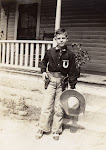
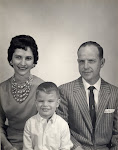
Here's what inevitably happens. I share a movie with a friend or a loved one. Something I think they'll really like but probably have not seen. They love it, and I tell them "That was one of my Dad's favorite movies."

So here are some of those movies, my memories and thoughts, and what made them my Dad's favorites.


Thursday, July 23, 2009

DESTRY RIDES AGAIN (1939)


1939 was a banner year in popular culture. “Gone with the Wind” and “The Wizard of Oz” top an astonishing list of admired and timeless movies from that year. Radio was at the peak of its popularity, and Batman debuted in Detective Comics # 27.

In 1939, the major Hollywood studios seemed to simultaneously decide that the western genre, long relegated to “B” movie status, was a proper vehicle for “A” list directors, stars, and budgets. Warner Brothers put James Cagney and Humphrey Bogart in “The Oklahoma Kid” and Errol Flynn in “Dodge City.” Twentieth Century Fox cast Tyrone Power and Henry Fonda in “Jesse James,” and placed John Ford at the helm of “Drums Along the Mohawk,” also with Fonda. Paramount put a huge budget behind Cecil B. DeMille’s “Union Pacific,” with Barbara Stanwick and Joel McCrea, and released “Geronimo,” the inspiration for the famous mid-air paratrooper yell from World War II. RKO got into the action with “Allegheny Uprising,” and United Artists released Walter Wanger and John Ford’s production of “Stagecoach,” which would launch John Wayne into super stardom. And then, from Universal Studios, there was “Destry Rides Again,” an “A” western strong on comedy and character.

More than any of the other films of that year, “Destry Rides Again” borrows heavily from the formula of the “B” westerns. Heavy on action and stunt work, these low budget, quickly shot movies were a mainstay of young and old alike, and featured stars such as Ken Maynard, Bob Steele, William Boyd, Johnny Mack Brown, Dick Foran, Tim Holt, and singing cowboys Gene Autry and Roy Rogers as straight-laced, square-jawed heroes. They are the movies my Dad grew up on.

There is much in “Destry,” that harkens to the familiar “B” western format - the corrupt town, the land-grabbing villain, the treacherous barmaid, the comic side-kick, the musical interludes, and the hero come to clean up the town. But it’s the variations on the familiar themes that make the movie so interesting, vital and fun

The depth and density of the corruption of Bottleneck, the setting of the movie, is almost unprecedented. It’s a palpable presence in the town’s saloon, overcrowded with riotous, unsavory extras. The urbane and unctuous saloon owner (Brian Donlevy), Frenchy, the saloon singer and hostess (Marlene Dietrich) and the sleazy, tobacco-chewing judge and mayor (Samuel S. Hinds) are all in on the illegal shenanigans. The threat is heightened by the caliber of the actors portraying these villains. And there has certainly never been a duplicitous barmaid that looked or sounded anything like Marlene Dietrich.

But the real break with tradition here is the character of Thomas Jefferson Destry, the hero with a reputation and a pedigree, brought in to save the day by the ineffective town drunk the villains have appointed sheriff. Destry is anything but what his reputation and western tradition would suggest. He arrives in town and is an immediate if unflappable laughing stock, much to the sheriff’s chagrin.


Gangly, mild-mannered, folksy, avoiding confrontation, lapsing into homespun anecdotes about probably apocryphal friends, carving napkin-rings, and most astonishingly, refusing to carry guns, Destry is unlike any western hero before.


But there is a method and a philosophy to Destry’s eccentricities …


… and as played by James Stewart, a hidden strength to the character, and a dangerous edge he keeps hidden until needed, a side of his character we see more often in Stewart’s more mature performances for Anthony Mann and John Ford later in his career.


Although others may remember Marlene Dietrich famously performing “See What the Boys in the Backroom Will Have,” I think it is the character of Destry that surprised and delighted my Dad, and made this one of his favorite movies. And the scene he remembered the most was not the often remembered “cat fight” between Dietrich and Una Merkle, but the aftermath when Destry incurs Frenchy’s ire.


1939 was also a big year for Stewart with five films in release. Just three years after his first film role, he begins the year as an almost unknown, recognized for his ensemble performance in Frank Capra’s “You Can’t Take It With You” the previous year, and ends it as a full fledged star, nominated for an Academy Award for his performance of Jefferson Smith in “Mr. Smith Goes to Washington.” It is interesting to note that Stewart took second billing to his female co-stars in each of his 1939 films, and would not receive top billing until “No Time For Comedy” in 1941.

Buy Destry Rides Again at Amazon.com.

© 2009 Edward Bowen

Thursday, June 25, 2009

BREAKING AWAY (1979)


In 1979, writer Steve Tesich, a Yugoslavian émigré, was about to hit it big. He would win an Oscar for his first produced screenplay, “Breaking Away,” and would follow with five more produced screenplays in as many years, including “Eyewitness,” “The World According to Garp,” and the highly autobiographical “Four Friends,” a script that highlighted his immigrant’s belief in the triumph of the American dream over devastating tragedy. He would work with some of the most acclaimed film directors of his generation, including George Roy Hill, Arthur Penn, John Badham, and three times with his “Breaking Away” collaborator Peter Yates. His play “Division Street” would be performed on Broadway. Eventually, after 1985’s “American Fliers” and “Eleni,” he would cease writing screenplays and focus on playwriting as he become increasingly disillusioned about America and in particular its foreign policy.

In 1979, Peter Yates was at the pinnacle of his success. His second outing as a director, 1968’s “Bullitt,” with its innovative and unforgettable car chase through the street of San Francisco, had established itself as a classic. Seven feature films later, his most recent release, “The Deep,” based on author Peter Benchley’s follow-up to “Jaws,” and featuring a just as unforgettable Jacqueline Bisset, had been a popular success, ranking among the top ten grossers in a year that inlcuded "Star Wars," "Close Encounters of the Third Kind," 'Smokey and the Bandit," and "Saturday Night Fever." The Academy would nominate him as Best Director for “Breaking Away,” which would also be nominated as Best Picture.

“Breaking Away” tells the story of Dave Stoller, played by Dennis Christopher, whose love of cycling and enthusiasm for Italian competitive cyclists leads him to take on a fanciful and perhaps delusional Italian persona, much to his father’s chagrin.


Stoller and his working-class friends, played by up-and coming actors Dennis Quaid, Daniel Stern and Jackie Earl Haley, spend the summer days swimming at the abandoned quarry, resisting the pulls of impending adulthood, entangled in romantic relationships, and sparing with haughty students from the local college, Indiana University. They compete against an arrogant college team in a climactic bicycle race, a battle emblematic of the antipathy between the townies, descendants of the local stoneworkers, or “cutters,” and the invading college students. The character of Dave Stoller is based on legendary bicyclist, Italian enthusiast, and Tesich’s college friend Dave Blase, and the race is an actual competition held annually at Indiana University, in which Blasé and Tesich participated during their college days.

Director Yates, Cinematographer Matthew Leonetti and Designer Patrizia von Brandenstein make the most of their Indiana locations, giving the film an authentic and believable beauty.

While most of the film focuses on the friendship and trials of the four main characters, it is Paul Dooley’s performance as Dave’s put upon father Raymond that steals the show, and the relationship of the father and son that provides the emotional foundation for the film.


Dooley delivers an astonishingly layered, unselfconscious and memorable performance, never shying away from the harsh and even cruel behavior of the character. It is his blustering inability and refusal to recognize, accept, or deal with his own parental emotions that is ultimately so endearing. He is representative of a generation or hard-working husbands and fathers for whom revealing any emotion other than anger and frustration was a sign of weakness. And due notice should be given to the less flashy but no less important performance from Barbara Barrie as Dave's charming, perceptive, understanding and patient mother. A busy television actress with memorable recurring roles in "Barney Miller" and "ThirtySomething" was nominated for a Best Supporting Actress Oscar for her role in "Breaking Away."


But I think Dooley's performance as Raymond Stoller is what my father liked best about “Breaking Away.” I believe he may have empathized with the character. My father came from working-class roots, grew up in the depression, and along with my mother sacrificed to raise a family. He shied away from excessive expressions of emotion, but was a loving, supportive and giving parent with a son I am sure he often did not understand.


A cartoonist, stand-up comedian and magician, Paul Dooley was discovered by director Mike Nichols, who cast him in the supporting cast of the original 1965 Broadway production of “The Odd Couple.” Dooley eventually replaced Art Carney as the persnickety Felix Ungar opposite Walter Matthau’s grouchy Oscar Madison. Dooley wrote for the landmark children’s series “The Electric Company” in the 1970’s. His first major film role was in Robert Altman’s “A Wedding.” Comfortable and proficient in improvisation, he became a favorite of the director, and appeared in a total of six of his films. He has made numerous memorable television appearances in series such as ‘ThirtySomething,” “Deep Space Nine,” “The Wonder Years,” “Desperate Housewives,” “My So-Called Life,” “Dream On,” and “The Practice.”

But his two most famous roles are as fathers in “Breaking Away” and 1984's “Sixteen Candles.”

“Breaking Away” is not the only movie featuring evocative father-son relationships on my Dad’s favorites list. The irresponsible father and the mature-beyond-his-years son in “A Hole in the Head,” the profane, combustible father and the bewildered son of “A Christmas Story,” and the unconventional, free-spirited uncle and surrogate father to a “middle-aged kid” in “A Thousand Clowns” were also favorites of my Dad.


Buy Breaking Away (Widescreen Edition)at Amazon.

© 2009 Edward Bowen

Monday, June 8, 2009

THE NIGHT STALKER (1972)


My Dad loved originality - unexpected twists on established genres or familiar plotlines intrigued him.

In 1972, almost everything about “The Night Stalker,” a television movie produced for "The ABC Movie of the Week,” was original and surprising. It is a merger of genres and styles, a fresh mash-up of horror, police procedurals, and “Front Page” style newspaper dramas. It eschews or reinvents all the gothic trappings previously associated with vampire movies, inserting the vampire for the first time fully into the modern world of blood banks and dragnets and forensics and bureaucracies. All the resultant ironies are fully mined in the script by acclaimed novelist and prolific short story and television writer Richard Matheson, adapted from the unpublished short story by Jeff Rice. In one scene after another, intrepid reporter Carl Kolshak is confronted with a series on increasingly inexplicable events and confounding evidence, all leading slowly and inevitably to the conclusion that the serial killer stalking Las Vegas must in fact be a real-life vampire.


Producer Dan Curtis had some experience reinventing the vampire genre. Years before Buffy and Angel, "Twilight,” or even Frank Langella’s “Dracula,” he had romanticized the vampire in his ground-breaking daytime series “Dark Shadows.” With “The Night Stalker” he does the opposite, reducing the vampire to a mysterious, depersonalized, silent, feral, largely off-screen presence. Matheson and Curtis would within a year revisit the genre in their TV version of “Dracula” starring Jack Palance, wherein they would invent a romantic backstory for the vampire that twenty years later would be the foundation of Francis Ford Coppola’s adaptation.

In “The Night Stalker,” Curtis reteams with his ‘Dark Shadows” composer Robert Cobert, who provides a striking and original score, a jazzy and bassy mix of musical styles that nicely mirrors the eclectic story elements.

There are numerous scenes that grab the imagination both in terms of content and technique – the autopsy from the corpse’s point of view, the coroner’s inquest in which the bizarre details of the murders are delivered with matter-of-fact dispassion, and the “wild brawl” in the hospital following the vampire’s raid on the its blood bank, a tour-de-force from director John Llewellyn Moxey (“The Saint,” “Mannix,” “Mission Impossible”) and Stunt Coordinator Dick Ziker with un-credited work from legendary stunt man Hal Needham.


But the movie truly belongs to Darren McGavin. His portrayal of irascible and resolute reporter Carl Kolshak brings humor and humanity to the proceedings, and drives the movie’s pace and tone.


McGavin was a particular favorite of my Dad’s from the time he played Casey in the TV series “Crime Photographer” in the early 1950’s. While on their honeymoon in New York in 1951, my Mom and Dad rounded a street corner and literally ran into McGavin, who they described as friendly and charming. Thirty-four years later I worked with McGavin on “Raw Deal,” and found him to be just as my parents had described.


In fifteen years working on feature films, the only autograph I ever requested was from Darren McGavin, and that was for my parents.


McGavin starred in seven TV series and guest starred in many more. He had a distinguished film career, including playing the profane father in “A Christmas Story” and an un-credited but crucial role in “The Natural.” But he is perhaps best known for his portrayal of Carl Kolshak in “The Night Stalker,” its sequel “The Night Strangler,” and the subsequent series “Kolshak: The Night Stalker.” His Kolshak is a unique and original creation, Woodstein in a seer sucker suit and a porkpie hat, volatile, passionate, funny, abrasive, sarcastic and indignant, a man with a moral code of his own making. There has never been a character quite like Carl Kolshak.


McGavin once told me that the hardest part of his career was the constant and inevitable nighttime shooting that this series required. Having just come from working on “Blue Velvet,” with seven straight weeks of night filming, I could certainly sympathize.

"The ABC Movie of the Week" was a television anthology series of made-for-TV movies airing on the ABC network in various permutations from 1969 to 1976. Adhering to a 90 minute running length, as opposed to the two hour slot standard of previous made-for-television movies, gave many of the films an enhanced pace and urgency. “The Night Stalker” certainly benefits from this. There were several notable entries to the series, including “Brian’s Song,” with James Caan and Billy Dee Williams, “Pursuit,” Michael Crichton’s directorial debut, the unforgetable “Trilogy of Terror” from Curtis and Matheson, and three more of my Dad’s favorites, “Duel,” from Matheson and director Steven Speilberg, “Something Evil,” also directed by Speilberg, and “Goodnight My Love,” written and directed by Peter Hyams and featuring the imaginative teaming of Richard Boone and Michael Dunn as private detectives in 1940’s Los Angeles. The program also spawned many successful series, such as "Starsky and Hutch," "Kung Fu," "The Six Million Dollar Man," and "Marcus Welby, M.D."


“The Night Stalker,” which manages to valiantly mask its television imposed budget restrictions, held the record as the highest rated television movie until “Roots” aired in 1977.


Buy The Night Stalker/The Night Strangler (Double Feature)
at Amazon.com
© 2009 Edward Bowen

Monday, May 11, 2009

GUNGA DIN (1939)


“Gunga Din” is a rousing adventure yarn, spun from the poem by Rudyard Kipling and combined with elements from Kipling’s “Soldiers Three” stories by prolific authors Ben Hecht and Charles McArthur. Hecht contributed to the screenplays of seven films released in 1939, including “Stagecoach,” “Wuthering Heights,” and “Gone with the Wind.” A marriage subplot of “Gunga Din,” completely fabricated by Hecht and McArthur, is reminiscent of their most famous theatrical collaboration, “The Front Page,” itself adapted to the silver screen numerous times.

The story of “Gunga Din” follows the exploits of three fun-loving British sergeants stationed in Colonial India, who, along with Gunga Din, their regimental bhisti (water-bearer) longing to throw off his lowly status and become a soldier of the Queen, become entangled with a deadly murder cult.

I know that my Dad enjoyed this film for its action and humor, for the comedic interplay of the main characters, and for its moving climax of self-sacrifice. There is a heightened and exaggerated level of performance from Cary Grant, Victor McLachlan and Douglas Fairbanks Jr. that lends the film lightness and energy. Grant in particular as the happy-go-lucky treasure hunter chews the scenery with abandon, afforded one of the rare opportunities, along with “Sylvia Scarlett” and “None But the Lonely Heart,” to affect his native cockney accent.

It’s an adventure movie for the 10 year old boy in all of us.


Director George Stevens learned his craft working on westerns and on comedies for Hal Roach, and both influences are in evidence here in the mix of low comedy and high adventure. It’s impossible to imagine Stevens adopting this light-hearted approach to soldiers and war in his later films. During World War II, Stevens and his film unit, the "Stevens Irregulars," would document the Normandy landings, the liberation of Paris and the discovery of the Nazi extermination camp at Dachau, forever influencing the tone and content of Stevens’ films.

Watching “Gunga Din” today elicits mixed and conflicting emotions, particularly in its treatment of colonialism in general and the Indian people in particular. Whereas the three British soldiers are the obvious heroes of the piece, it is the Indian Gunga Din who is eventually revealed to be the bravest of the lot. However, Din’s wish to essentially be British, even when seen in light of his rejection and treatment by his own people, is demeaning. The producers had originally intended to cast Sabu, a fifteen year old native of India, in the role of Gunga Din. When Sabu proved unavailable, they instead cast 47 year old Caucasian Sam Jaffe, whose most recent role had been the 300 year old High Lama in “Lost Horizon.” Jaffe gives a powerful, heart-wrenching performance, but it’s embarrassing that none of the three most prominent Indian characters in the film are portrayed by Indians, or even Asians. American Abner Biberman, most known for essaying criminals and convicts, plays the treacherous Chota, and Italian-American Eduardo Ciannelli plays the monstrous Guru. All give powerful, affecting performances, but in the Indian equivalent of blackface. Noting that none of this is uncommon or unusual for a film of this era does little to lessen its sting.

If a modern viewer can look past this (and there is a whole other argument to be addressed as to whether a modern viewer SHOULD look past this), then “Gunga Din” can be a wonderfully entertaining experience from a cast and a director at the height of their powers to entertain.


The influence of “Gunga Din” is far reaching. “Indiana Jones and the Temple of Doom” has whole sequences that feel lifted from “Gunga Din.” Soldiers involved in extra-military treasure hunting adventures are in evidence in films as disparate as “Kelly’s Heroes” and “Three Kings.” And “Gunga Din” was remade as a western starring Sinatra’s Rat Pack as “Three Sergeants,” with Sammy David Jr. taking on the Gunga Din role.


Buy Gunga Din at Amazon.com.

© 2009 Edward Bowen

Monday, May 4, 2009

MURDER ON THE ORIENT EXPRESS (1974)


At least three things distinguish “Murder on the Orient Express.”

First, it’s a who-dun-it with a most unusual, outrageous, and original solution. We can thank Agatha Christie and her 1934 novel for that. It’s a surprise ending only equaled in the writer’s oeuvre by “The Murder of Roger Ackroyd” in 1926, which contains a distinctly literary twist ending.

Second, the striking and elegant costume and production design by Tony Walton, who began his film career ten years earlier with “Mary Poppins.” It’s a gorgeous color depiction of the era, filtered through years of cinematic influences, and lovingly photographed by Geoffrey Unsworth at the pinnacle of his impressive career.

Third, it has an all-star cast to end all all-star casts, one that would put Irwin Allen’s casting director to shame. In their careers, the 15 principal cast members amassed a total of 29 Academy Award nominations (with 8 wins), 42 BAFTA nominations (with 9 wins), 21 Emmy nominations (with 5 wins) and 11 Tony nominations (with 6 wins). Six of its stars (John Gielgud, Wendy Hiller, Vanessa Redgrave, Colin Blakely, Rachel Roberts and Albert Finney) were simultaneously appearing in important West End shows during the film’s production. This elite group of theater actors is joined onscreen by seven unquestionable movie STARS (Sean Connery, Lauren Bacall, Richard Widmark, Tony Perkins, Jacqueline Bisset, Michael York, and Ingrid Bergman). Established character actors Martin Balsam and Jean-Pierre Cassel round out the cast. You might also recognize George Coulouris, Thatcher in "Citizen Kane," as the helpful doctor.


The script by Paul Dehn provides several of these actors with juicy, melodramatic parts. Director Sidney Lumet, on an odd but successful hiatus from gritty, urban, contemporary films “The Anderson Tapes,” “The Offence,” “Serpico,” and later “Dog Day Afternoon” and “Network”) allows the performers to sink their teeth firmly and enjoyably into the scenery. Of particular note are Lauren Bacall as the loud, obnoxious American widow and former actress, Wendy Hiller as the aloof and emotionless Russian princess, Rachel Roberts as the severe and unyielding German maid, Tony Perkins as a mother-obsessed personal assistant, resonating back to his most famous role as Norman Bates in “Psycho,” and in particular Ingrid Bergman in a brief but Academy Award-winning performance as a psychologically unbalanced Swedish missionary.


But it is Albert Finney’s unselfconscious turn as Belgian detective Hercule Poirot that carries the show. Finney virtually disappears into the role, both psychologically and physically, concealed in make-up and mannerisms. He completes the transition from leading angry young man to character actor he began in “Scrooge” four years earlier, briefly taking on the mantle usually reserved for Alec Guinness. It’s a revelatory performance, and a detective very unlike any that American audiences had seen before. In 1974, Poirot, who appears in 33 of Christie’s novels and 51 of her short stories between 1920 and 1975, had rarely been portrayed in the movies or in television. Charles Laughton was the first to play the detective in a West End production of “The Murder of Roger Ackroyd” titled “Alibi.” Only four actors (Austin Trevor, Martin Gabel, Tony Randall, and Horst Bollmann) essayed the role in film or television prior to 1974. It is Finney who defined the character with all its dandified eccentricities, slow and deliberate mannerisms, sudden bursts of passionate energy, and dazzling mental pyrotechnics.


Director Lumet tells a wonderful story about his cast:

A charming thing happened at the first reading of Murder on the Orient Express. Five stars of the English theatre were appearing in the West End at the time -- John Gielgud, Wendy Hiller, Vanessa Redgrave, Colin Blakely, and Rachel Roberts. Sitting with them were six movie stars: Sean Connery, Lauren Bacall, Richard Widmark, Tony Perkins, Jacqueline Bisset, and Michael York; Ingrid Bergman and Albert Finney bridged both worlds.


They began to read. I couldn't hear anything. Everyone was murmuring their lines so quietly they were inaudible.


I finally figured out what was happening. The movie stars were in awe of the theatre stars; the theatre stars were in awe of the movie stars. A classic case of stage fright.

I stopped the reading and, saying that I couldn't hear a thing, asked them to please talk to one another as if we were at Gielgud's house for dinner. John said he'd never had such illustrious guests to dinner, and off we went.

Buy Agatha Christie's Murder on the Orient Express at Amazon.com.

© 2009 Edward Bowen

Saturday, April 25, 2009

THE HAUNTING (1963)


I know that my Dad thought that “The Haunting,” was the scariest film he ever saw.

Eschewing overt violence and even physical threat, the film maintains an overwhelming atmosphere of psychological dread.

This claustrophobic, black and white, character driven horror tale might seem a departure for Robert Wise, the director of the sweeping, colorful, vibrant musicals “West Side Story” two years earlier and “The Sound of Music” two years later. But it harkens back to Wise’s days as an editor for Val Lewton, a producer whose low budget horror tales emphasized the unseen over the seen and the suggested over the explicit. Wise’s directorial debut, “The Curse of the Cat People,” a deceptively titled, beautifully etched coming-of-age tale, was produced for Lewton’s unit at RKO Pictures. “The Haunting” would be Wise’s last black and white film.

So what makes “The Haunting” so scary? What’s in Wise’s directorial tool box that’s used to create such a sense of unease and dread?

First, the vividly drawn characters in this ensemble piece, each a familiar stock character endowed with believable psychological depth, have detailed back stories that link their psyches inextricably to the back story of the house itself and the events that unfold there. The haunting becomes psychologically personal. Shirley Jackson, author of the short story “The Lottery,” that perennial favorite of high school English teachers, wrote the 1959 novel. Television scribe Nelson Gidding, screenwriter on the Susan Hayward shocker “I Want To Live” and later of “The Andromeda Strain,” both directed by Wise, provided the screenplay.

Copied and plagiarized numerous times, it’s now a familiar set-up – paranormal investigators ensconce themselves in a purportedly haunted house to prove or disprove the existence of the supernatural. But in 1959 and 1963, it was a fairly original treatment of the classic haunted house genre.


Wise, director of photography Davis Bolton and camera operator Alan McCabe use all the cinematic tricks at their disposal. High contrast photography provides impenetrable, threatening shadows. Deep focus makes the sinister surroundings a constant, palpable presence, while newly produced wide angle Panavision anamorphic lenses distort the environment. Compositions emphasize disturbing elements in the house – silent statues, half-opened doors, anthropomorphic patterns and designs in the walls. Infrared film turns the exterior skies a murky black, even in daytime. Canted angles make the house seem off-balance. In fact, the camera work continually makes the house seem alive, watchful and threatening.

But it’s the use of sound that buoys the horror, whether it is the almost subliminal whispers, the pounding on the doors and walls, or the unnerving music score of British composer Humphrey Searle, a marriage of the styles of Bernard Herrmann and James Bernard by way of Schoenberg.


What scene did my Dad remember most from this movie? The door ...


I was exposed to “The Haunting” on the CBS Late Movie in the early 70’s.


I would watch it alone in our basement, often becoming too scared, or too sleepy, to finish it. I saw it numerous times in its television pan-and-scan version. In its original theatrical format, preserved in recent DVD releases, the picture was 2.35 times as wide as it was tall. On television, the width was reduced to 1.33 times as wide as tall, requiring that about half of the picture be cropped, and destroying the film’s careful photographic compositions. To follow the action, the cropped image was "panned and scanned." Having become so accustomed to the cropped version, I was shocked when as an adult I finally saw the un-cropped, letterboxed version on DVD. Although I am a strong proponent of using letterboxing to preserve the filmmakers’ intentions, and there is no doubt that the original compositions in this film are powerful tools in creating suspense, there was something disconcerting and frightening in the claustrophobic effect caused by the combination of cropping and wide angle lens distortion found in the television version. And I am embarrassed to admit that I sometimes miss the version that so terrified and thrilled me as a youngster.


Buy The Haunting from Amazon.

The opening ...


 © 2009 Edward Bowen

Wednesday, April 22, 2009

THE QUIET MAN (1952)


Despite relatively recent trends in brutal violence, abrasive editing, martial arts, wire work, special makeup effects, and CGI, and with all due respect to Bruce Lee and Jackie Chan, to James Bond and Jason Bourne, to Scorsese and Tarantino, for my money the best fight scene ever is still in “The Quiet Man.” I know my Dad would agree.

Why is it the best? It’s exciting. It’s funny. But mostly because it’s the emotional and dramatic payoff everything else in this charming, warm, romantic, amusing film has built toward. Aristotle would call it inevitable.

Suffering from the guilt of a terrible, tragic secret, former boxer Sean Thornton (John Wayne) has retired to Ireland, the land of his ancestors, where he meets and woos and weds Mary Kate Danaher (Maureen O’Hara). Sean’s chief protagonist is Squire 'Red' Will Danaher (Victor McLaglan), brother to Mary Kate, who spends the entire movie harassing and insulting Thornton, spoiling for a fight, refusing his sister her dowry, and generally being a prideful, vindictive pain. The dowry becomes a bone of contention for the newly married couple. For Sean, the money is unimportant, not worth begging for, and not worth fighting for. For Mary Kate, it’s her birth right and a symbol of her independence. Eventually, Mary Kate leaves Sean. He tracks her down and literally drags her cross-country to witness his confrontation with her brother, gathering a crowd of expectant spectators along the way. So anticipated has this epic altercation been that people come from far and wide to witness the proceedings. It’s such a prolonged battle that it even has its own intermission.


“The Quiet Man” was quite a departure for its director, John Ford, its star, John Wayne, and its studio, Republic Pictures. Since the war Ford had specialized nearly exclusively in Westerns. Wayne had fully developed his heroic persona playing cowboys and military men. Republic specialized in low budget B-Westerns, and gambled on what other studios dismissed as “an Irish story,” but not until Ford and Wayne and O’Hara had to agree to produce a western for the studio. The result was “Rio Grande.” Republic would receive their first and only Academy Award nomination for Best Picture for ‘The Quiet Man.”

“The Quiet Man” was Wayne’s favorite film. Winton C. Hoch, a frequent Ford collaborator, won the Academy Award for his beautifully photography of the lush Irish countryside. The script by Frank Nugent provided Ford with whimsical, finely drawn characters, emotional and romantic depth, and warm humor. The cast of Hollywood veterans and indigenous stage actors from Ireland’s Abbey Theatre are a joy. And the sexual politics of the film are surprisingly complex for a film of this era, especially when compared to a similar situational treatment in “McLintock” eleven years later.

© 2009 Edward Bowen
© 2009 Edward Bowen

Pages