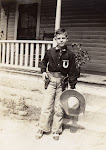
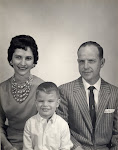

Here's what inevitably happens. I share a movie with a friend or a loved one. Something I think they'll really like but probably have not seen. They love it, and I tell them "That was one of my Dad's favorite movies."

So here are some of those movies, my memories and thoughts, and what made them my Dad's favorites.


Monday, March 5, 2012

1939 A Montage - Part 5: Frankly My Dear There's No Place Like Home


1939.  Laurel and Hardy perform “Shine on Harvest Moon” in “Flying Deuces.”  My Dad may have preferred “At the Ball, That’s All” from “Way Out West” two years earlier, but the boys performance here retains a great deal of their earlier charm.  Two James play unlikely cowpokes.  James Stewart is an amiable, gun-less lawman in “Destry Rides Again,” and James Cagney, in a ten-gallon hat, plays what co-star Humphrey Bogart described as a giant mushroom in “The Oklahoma Kid.”  The serial “Buck Rogers” sets the templates for phasers and transporters.  Sherlock Holmes in the form of Basil Rathbone makes two appearances, in “The Hound of the Baskervilles” and “The Adventures of Sherlock Holmes.”  He’s also a second generation Frankenstein opposite Boris Karloff’s third turn as the monster in “Son of Frankenstein.”  Henry Hull offers sage advice on lawyers and their place in the wild west in “Jesse James,” as does a ravishing Norma Shearer to a provocative Joan Crawford in “The Women.”  Bette Davis plays an empress and a queen and an unmarried mother and a dying debutante.  Director George Stevens shepherds a troubled production to fruition with “Gunga Din.”  Charles Laughton wrings more pathos from the tragic Victor Hugo character than had Lon Chaney in the remake of “The Hunchback of Notre Dame.”  Thomas Mitchell is there to support in the role of Clopin, only one of five astonishing performances from 1939.  If any one actor can embody this amazing year, it’s Thomas Mitchell.  He’s Kid Dabb in “Only Angles Have Wings,” Diz Moore in “Mr. Smith Goes to Washington,” Gerald O’Hara, father to Scarlett, in “Gone With The Wind,” and takes home the best supporting actor Oscar for his performance as Doc Boone in “Stagecoach.”

“Stagecoach” is one of two films that, after “Gone With The Wind” and “The Wizard of Oz,” are the most remembered and revered of 1939.  The other is “Mr. Smith Goes to Washington.”  Both films are the products of directors later raised to the pantheon of auteur by critic Andrew Sarris and the writers at Cashier Du Cinema in France. “Mr. Smith Goes to Washington,” is an ultimately uplifting but at times dark study of corruption in the United States Senate and its effect on a starry-eyed, optimistic, patriotic man-child appointed to the august body through the manipulations of a political cabal.  It was directed by Frank Capra, who had already received three previous Academy Awards for directing. “Stagecoach” is a reimagining of the Western as an amalgam of archetype, stereotype, action adventure, and character study, and is often credited with rescuing the Western from the ghetto of low budget, adolescent-oriented productions.  Director John Ford had already won one best director statuette and would eventually receive three more.

Prior to 1939, the Western was largely consigned to low budget poverty-row studios, produced quickly and cheaply, churned out like link sausages, and screened for young audiences on Saturday mornings.  (Yes, the tradition of reserving Saturday mornings for children’s fare predates the popularization of television.)  In 1939, Warner Brothers, Paramount, Universal, Twentieth Century Fox, and United Artists all release big budget Westerns, throwing lavish production value and star power their way.  Alongside Cagney and Bogart and Stewart, Marlene Dietrich (“Destry Rides Again”), Barbara Stanwyck, Joel McCrea (“Union Pacific”), Tyrone Power and Henry Fonda (“Jesse James”) all headline Westerns this year.  Warner Brothers gives “Dodge City” all the resources at their disposal – their most bankable stars (Errol Flynn and Olivia DeHaveland), expensive and time-consuming Technicolor photography, massive scale and broad vistas.  It would end up as the fourth highest grossing movie of the year, after “Gone With The Wind,” “The Wizard of Oz,” and the Ernst Lubitsch comedy “Ninotchka.”

And an under recognized David O. Selznick receives the Irving Thalberg award from the Academy.  

Friday, February 24, 2012

1939 A Montage - Part Four: Puttin' On The Balalaika in Seaport

I'm Puttin' On The Balalaika right here in Seaport.  Garbo will laugh. Dr. Livingston will come.  And Buster will play the ukulele.


Friday, February 17, 2012

1939 A Montage - Part Three: Sleuths, Swing and Stereotypes

Part three of the sights and sounds of the movies of 1939 ...


In which mysteries are solved and monsters vanquished by teenaged girls, magicians, buffoons, socialites and yellowfaced Europeans to the melodious bowing of Jascha Heifetz ...


While Lupe, W.C., Huck, Edgar, Charlie, Mortimer, Shirley, Harpo, Stan, Ollie and Cheetah wait on the Robert E. Lee with Fred and Ginger.


Dedicated to Boris and Basil and Bela; Moto, Wong and Chan; and the ubiquitous Walter Brennen.


Friday, February 10, 2012

1939 A Montage - Part Two: Coeds Ride the Range


Part two of the sights and sounds of the movies of 1939 - B-Cowboys ride the range, a white boy croons a negro spiritual, co-eds dance and patriots sing.  Dedicated to Roy, Duke, Bob, Ken, Gabby, Herb, Gene, and the Colonel.


Tuesday, January 31, 2012

1939 A Montage - Part One: Over There


As I think about my Dad’s favorite movies, I am inextricably drawn to the year 1939.  I’ve already considered “Gunga Din,” "The Oklahoma Kid" and “Destry Rides Again,” but there is also “Mr. Smith Goes to Washington,” “Stagecoach,” “Another Thin Man,” “Jesse James,” “Goodbye Mr. Chips,” “The Hunchback of Notre Dame,” “Of Mice and Men,” and “Only Angles Have Wings,” all among Dad’s favorites. 

So I have embarked on a project to encapsulate the movies of 1939 in a series of montages.

In 1939, my Dad would have been ten years old.  He would have spent his hard-earned nickel going to see “B” cowboy movies on Saturday morning, not classy studio financed “A” pictures.  So these films became my Dad’s favorites later, when re-released to theaters, or even over a decade later when aired on television.

In 1939 in America, the good news was that the Great Depression was approaching its end.  The bad news was that this was in no small part due to the country rearming in response to the escalating wars in Europe, Asia and Africa, wars already lumped under the collective designation World War II, a conflict American would enter two years later.

A recovering economy and encouraging returns spurred American studios and filmmakers to go bigger and better than ever before, resulting in 1939 often being considered Hollywood’s Greatest Year.  This claim can be made on the strength of two films alone released that year, both by Metro-Goldwyn-Mayer Studios.  The first is “Gone With the Wind,” independently produced by maverick and iconoclast David O. Selznick.  The second is “The Wizard of Oz,” produced by MGM itself.  Amazingly, both films credit the same director, Victor Fleming, although both productions were actually guided by multiple directors.  George Cukor, Sam Wood, Melvyn LeRoy and King Vidor worked un-credited.

 “Gone With the Wind” and “The Wizard of Oz” may be the most beloved and remembered productions from the 1939 or from any year during the Hollywood Studio System, but the films of 1939 do not end here.  There were ten movies nominated by the Academy of Motion Picture Arts and Sciences for Best Picture Oscars from 1939, and the remaining eight were “Dark Victory,” “Goodbye Mr. Chips,” “Love Affair,” “Mr. Smith Goes to Washington,” “Ninotchka,” “Of Mice and Men,” “Stagecoach,” and “Wuthering Heights.”

But there was more than these movies to 1939, more than Greta Garbo laughing on screen for the first time in “Ninotchka,” more than a stunt horse being driven over cliff to its death in “Jesse James,” more than the cat fights of “The Women” and “Destry Rides Again,” more than Astaire and Rogers recreating the dances and “The Story of Vernon and Irene Castle,” more than Robert Donat’s Oscar winning, decade-spanning performance in “Goodbye Mr. Chips,” more than the tipsy sparring of William Powell and Myrna Loy in “Another Thin Man,” more than the Technicolor Shirley Temple in “The Little Princess,”  more than the swashbuckling antics of “Gunga Din.” Over 500 features were released in the United States alone, not to mention over 150 cartoons, at least eleven serials and innumerable short subjects, newsreels and travelogues. Budgets ranged from almost 4 million dollars for “Gone With the Wind” to Poverty Row potboilers at as little as $3000.  Film series included installments from Laurel and Hardy, Buster Keaton, Our Gang, the Marx Brothers, The Three Stooges, the Dead End Kids, Nancy Drew, Mr. Woo, Charlie Chan, Tarzan, and Blondie.

The motion picture industries in Europe and Asia were severely impacted by the escalating conflicts there. By 1939, the Germany film industry was nationalized and controlled by the Nazi Party, non-Arians were barred from employment, and film criticism was abolished.  The Japanese film industry was taken over by the state in 1939 as well.  France and Britain declared war on Germany in September; France would surrender to Germany less than a year later.  China and Japan had been at war since 1937, and Italy had invaded Ethiopia in 1935.  Still, Great Britain released over 75 feature films in 1939, including movies starring Bela Lugosi, Leslie Banks (five films), James Mason, Ralph Richardson (four films), Rex Harrison (2 films), Laurence Oliver and Valerie Hobson (four films).  There were only a handful of films produced in Italy.  This is also true of France, but this included one film by legendary director Abel Gance (“Louise”) and what many consider to be one of the greatest films of all time, Jean Renoir’s “a Règle du jeu” (“The Rules of the Game”).  Germany produced over twenty films, many of them anti-Semitic treatises.  Infamous director Viet Harlan, who would a year later inflict the notorious “Jud Süß” (“The Jew Suss”) upon the world, released a remake of F.W. Murnau’s sublime “Sunrise.” China’s massive film industry released over 130 films in 1939, but only a dozen or so were generated on the mainland; the rest originated in Hong Kong. The Soviets produced over 40 films, among them the amazing "Vasilisa Prekrasnava." Indian Cinema was characteristically vibrant.

Here’s a brief look at the foreign films of 1939, Part One of  "1939 - A Montage."

"Over There"

Thursday, February 4, 2010

BIG JAKE (1971)


John Wayne spent the 1960s and 70s defining and refining his brand. His look, stance, and character became set in stone. He often even wore the same costume from film to film. He become “John Wayne,” the iconic figure that would outlive the man, a personage so enduring that in 2009, according to the annual Harris Poll, he was still among the top ten “favorite movie stars,” thirty years after his death. His image was so established in the public consciousness that the smallest visual variations could be extraordinarily evocative (an eye patch in “True Grit,” a moustache and van dyke in “The Shootist”) or jarringly unconvincing (modern dress in “McQ” and “Brannigan”).


Wayne had been mentored throughout his career by powerful and influential director John Ford, who had pushed Wayne toward more nuanced and then darker roles, culminating the vengeful, driven Ethan Edwards in “The Searchers” and the drunken, bitter, heart-broken Tom Doniphon in “The Man Who Shot Liberty Valance.” In the 1960s the duo would work together on one subsequent feature, “Donovan’s Reef,” but Wayne’s character in this lighthearted and frothy tale, another of my Dad’s favorites, has more in common with Wayne's later films than with his earlier work for Ford.

Wayne had created his own production company in the early 1950s. He had taken on directorial duties in 1960 with “The Alamo.” His transformation from John Wayne the actor to John Wayne the franchise begins with “Rio Bravo” in 1959. In this Howard Hawks directed venture, Wayne plays the role he will perfect and simplify through the next 17 years. He plays basically the same character in a series of westerns and non-westerns alike, including “McLintock,” “The Sons of Katie Elder,” “El Dorado,” “The War Wagon,” “Hellfighters,” “The Undefeated,” “Chisolm,” “Rio Lobo,” “The Train Robbers” and “Cahill, U.S. Marshall.” As he took more and more creative control of his movies, a pleasant predictability emerged. Casts include repeat appearances by members of the John Ford stock company, veteran Hollywood performers and second-generation Hollywood actors, including Wayne’s own sons. Rousing scores by Elmer Bernstein became Wayne’s recognizable soundtrack. And the movies recall elements if not entire scenes from Wayne’s earlier films.

As Wayne entered the 1970s he remained relevant by embracing his age and becoming the representation of a by-gone era, a living, breathing anachronism at the dawn of the 20th century in the American West. Lodged between two attempts by Wayne to stretch his acting muscles and break from his established persona, “True Grit” in 1969 and his final film “The Shootist” in 1976, are ten films, eight of them westerns.

The best of these, and my Dad’s favorite, is “Big Jake.”

In “Big Jake,” Wayne plays former land baron Jacob McCandles. Estranged from his family for ten years, he is drafted to deliver ransom for his grandson (played by real-life son Ethan), whom he has never met, kidnapped by a ruthless gang of outlaws. McCandles is accompanied on this quest by his resourceful and obedient dog, his two sons (one played by real-life son Patrick Wayne, the other by Robert Mitchum offspring Chris Mitchum), and an old Native American companion and ally (played by Bruce Cabot).

“Big Jake” is book-ended by two powerfully staged scenes of suspense and carefully choreographed violence. In the first, the outlaw gang slowly, calmly, but immutably approaches the McCandles ranch across a wide plain. It’s a good five minutes before they arrive at the ranch, and their approach is witnessed from the viewpoint of several characters, building considerable tension. In some ways, the scene is reminiscent of Omar Shariff’s introduction in “Lawrence of Arabia,” with a looming threat drawing closer almost in real time. The suspence is damaged by revealing the gang too early, and by occasionally cutting to closer shots of the gang as they approach, but the sequence still retains much power. It culminates in surprisingly graphic violence, unprecedented for a John Wayne film, when the gang brutally attacks the ranch and kidnaps the young boy. This established threat of unrestrained violence hangs heavily over the remainder of the film.

video

In the final scene, McCandles and his companions face off against the gang, each individually pitched against an equal and opposite opponent.

It’s hard to know who to credit with what are some interesting and effective directorial choices in these scenes. The director of record is George Sherman, directing his last feature. Sherman had directed almost 50 “B” westerns between 1937 and 1942, eight of which starred Wayne early in his career. Most of these were “Three Mesquiteers” adventures pairing Wayne with Ray “Crash” Corrigan and Max Terhune. Sherman went on to direct more than 65 more films, never breaking away from his low budget roots. He directed the second unit for Wayne in 1942’s “Flying Tigers,” and produced “The Comancheros" for Wayne in 1961. Wayne was exhibiting his well-known loyalty by handing the reigns of a major project to Sherman. Accounts vary as to who the film’s actual director was. Some say that Wayne took over directing duties from Sherman when he arrived on the set a few days into the shoot. Others credit Sherman with convincing Wayne to incorporate more realistic violence, which Wayne was on record detesting. If Don Siegel’s account of directing Wayne in his last feature, “The Shootist,” is to be believed, then I suspect that Wayne’s mood swings, sometimes demanding and defiant, sometimes conciliatory and diffident, determined who was directing on any given day.

Between the opening and climactic scenes, Wayne’s Jake McCandles proves more resourceful than the combined accoutrements of the modern age, including automobiles, motorcycles, scope rifles, and automatic pistols. There are scenes of unrepentant violence and inappropriate humor, performances both convincing and strained, a striking ambush of automobile driving Texas Rangers by the kidnap gang, and familiar bits of business lifted from earlier and frankly better Wayne films. Wayne evidences embarrassment at his need for eyeglasses as he does in “She Wore a Yellow Ribbon.” He utters “that’ll be the day,” the catch phrase from “The Searchers.” There’s an overblown comic fight scene with a massive foe that harkens back to “The Quiet Man” and “McLintock,” and most nostalgic and emotionally resonant of all is the casting of Maureen O’Hara as McCandles’ estranged wife in the last of their five appearances together.

video

In “Big Jake,” screenwriters Harry Julian Fink and Rita M. Fink, who crearted Dirty Harry the same year, provide Wayne with one of the strongest antagonists of his career. John Fain, leader of the kidnappers, as played by Richard Boone, is McCandles’ equal in almost every way, and theirs is a conflict as much of strategy as brawn and skill. They are near doppelgangers - Fain the dark mirror image of McCandles. Even though they have only two scenes together in the film, the conflict between them is palpable throughout, and the screen sizzles with tension when they are together. Richard Boone finds just the right threatening tone to counter Wayne’s confident swagger. A talented and underused actor, Boone was best known as Paladin in the hit TV series “Have Gun Will Travel,” a series the Finks regularly scripted.

video

I came of age as a movie-goer in the 1970s. My Dad and I shared enjoyment of these John Wayne films, and anticipated their release in the same way we looked forward to a new James Bond picture. For my Dad, I suspect that these simple morality tales with easily identifiable and larger-than-life heroes and villains harkened back to the “B” westerns, some starring John Wayne, that he grew up watching, but with added production value, more action and larger scale. For me, they were big budget renderings of the television westerns I grew up watching, and in this my Dad and I shared a common nostalgia. I also suspect that for my Dad these movies were comforting islands in a sea of cinematic change, more familiar and reassuring than the violent and morally ambivalent films from other younger filmmakers (although he often embraced surprisingly avant-garde films, such as “2001: A Space Odyssey.”)

There are also regrettable carry-overs from an earlier time that went unnoticed to the 15 year old viewer I was in 1971. John Ford often evidenced, for his era, a rather sophisticated or at least complex view of sexual politics and race relations. One need only compare “The Quiet Man” to “McLintock” is see that Wayne did not follow in his mentors footsteps in these areas. In 1971, the year “Big Jake” was released, Wayne expressed some horrifying and embarrassing thoughts on race relations in a controversial Playboy interview. In a year that saw “Shaft” become a mainstream hit, there are only two African-American characters in “Big Jake,” both servants. There is an outlandish and insensitive throw-away joke at the expense of two Chinese extras that manages to insult both Chinese and Native Americans. But more unfortunate is the casting of Bruce Cabot as McCandle’s loyal and obedient Native American companion, Sam Sharpnose. There is certainly a long tradition of Caucasian actors playing characters of color in Hollywood pictures, but by 1971 Chief Dan George had been nominated for his work in “Little Big Man.” Even Tonto, whose character in the Lone Ranger series foreshadows Sharpnose, was portrayed by Native American Jay Silverheels. Wayne’s motives in casting Cabot, who had played the romantic male lead in "King Kong" in 1933, are hard to criticize. He and Wayne had become close friends while working together on "Angel and the Badman" in 1947. Cabot became a regular in Wayne’s movies, appearing in twelve. In 1971 Cabot was ill and suffering from addiction. Being cast in “Big Jake” was a life line for the actor, who died the next year. And his performance in “Big Jake” is solid if unconvincing. But the character and the casting are a constant reminder of the slowly waning prejudices of another time. Most troubling is the cavalier attitude the white characters evidence toward Sharpnose's fate, not much different from their reaction to the fate of the dog, and expressed in a celebratory freeze-frame that leads into the closing credits.

Still, there is much to enjoy in “Big Jake." It is a streamlined and fast-paced quest, with elements both familiar and unique. And at the center is not just John Wayne, but “John Wayne,” and the film rests firmly on the foundation of his life-long career.

In many ways, Wayne was the embodiment of America, both its attributes and its failings – larger than life, independent, confident, heavy-handed, macho, paternalistic, violent, racist, sexist, clannish, brave, conservative and reactionary.

“Big Jake” exemplifies all of these.

Buy Big Jake at Amazon.com.

© 2010 Edward Bowen


Monday, December 21, 2009

A STAR IN THE NIGHT (1945)


In the 1960’s and 70’s, director Don Siegel was known for his urban, gritty, often violent crime dramas, the best example being “Dirty Harry.” In the 1950’s, he was known as an up-and-coming director of tough and smart “B” pictures, like “Invasion of the Body Snatchers.” But in the late 1930’s and 40’s, he was under contract to Warner Brothers, and his specialty was editing montages, those nifty, layered, transitional sequences with their spinning newspapers, peeling calendar pages, flying graphics, canted angles, stock footage and rapid fire images, for feature films. So good was he at this job that Jack Warner refused to let Siegel out of his contract so he could direct features himself. The consolation prize evidently thrown Siegel’s way was the opportunity to direct short subjects for the studio. Two he directed in 1945 both won Academy Awards in 1946 - “Hitler Lives” for Best Documentary, Short Subject and “A Star in the Night” for Best Short Subject, Two-Reel.

A Star In The Night” is an modern re-imagining of the Nativity Story, writ small, personal and accessible. It is a parable with J. Carrol Naish as a disenchanted Scrooge-like “inn-keeper” who, along with his rather misenthropic guests, learns the true meaning of Christmas when, on Christmas Eve, three gift-bearing cowboys, a philosophical hitchhiker, and a young pregnant couple named Maria and Jose, converge on his isolated desert motel after he erects a giant shining electric star to attract business.

A talented and ubiquitous character actor with over 200 film and television credits, Naish is best known to my generation as the villainous Daka in the 1943 “Batman” theatrical serial, and for roles in genre pictures such as “House of Frankenstein” and “The Beast with Five Fingers,” all seen in television re-runs and distributed on 8mm film for home viewing. He was perhaps best knows to my father’s generation in the title role of the top rated radio comedy, Life with Luigi.

The cast is rounded out with recognizable character actors the likes of Donald Woods, whose television and move career spanned six decades; Rosina Galli, at one time the prima ballerina (1914-29) and ballet mistress (1930-34) of the Metropolitan Opera; Richard Erdman, who is still making movies and television shows to this day; blustery Dick Elliot, who with 350 credits specialized in rotund and apoplexic characters, with memorable parts in “Mr. Smith Goes to Washington, ” “It’s a Wonderful Life,” and as the original Mayor Pike on “The Andy Griffith Show;” silent film actress Claire Du Brey; Irving Bacon, with an astonishing 500 + screen credits, a dozen of which were for director Frank Capra; and Anthony Caruso, who, with almost 250 big and small screen credits, played the mob boss Bela Oxmyx in the original Star Trek series episode, "A Piece of the Action.”


Produced to play in theaters as part of a feature program during the holiday season, this is one of many interesting short subjects created by the Hollywood studio system at its heyday that might have been lost forever were it not for Turner Classic Movies.

It is a terrific film for the holiday season, moving, amusing and imaginative. Siegel keeps the plot and characters moving, and you can almost forget that nearly the entire film takes place in one set. Part of the fun is watching these talented actors make emotional u-turns as they decide to sacrifice their comforts to help the young couple in need. Also amusing is how Siegel and writer Saul Elkins cleverly avoid any direct mention of the couple's delicate condition, sidestepping any issues with Production Code restrictions and creating a running gag in the process.

I can’t say that “A Star in the Night,” was one of my Dad’s favorite movies. I can’t even say for sure if he ever saw it. But it’s one I think he would have liked very much, if for no other reason than the cleverness of the allegory and the filmmakers’ commitment to the metaphor. One of my Dad’s favorite movies was John Ford’s enjoyably overwrought “3 Godfathers,” which similarly retells the Nativity story with equal ingenuity.

You can see "A Star in the Night" here in its entirety, at least until TCM asks me to take it down. Consider it a twenty minute Christimas card, and Happy Holidays.

Part One

video

Part Two

video

Part Three

video
© 2009 Edward Bowen

Pages