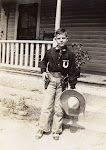
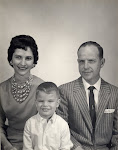

Here's what inevitably happens. I share a movie with a friend or a loved one. Something I think they'll really like but probably have not seen. They love it, and I tell them "That was one of my Dad's favorite movies."

So here are some of those movies, my memories and thoughts, and what made them my Dad's favorites.


Tuesday, June 26, 2012

2001: A Space Odyssey (1968)


It is the work of a master film stylist in collaboration with a popular science-fiction author.  It is visually stunning, employing groundbreaking special effects, and taking full advantage of the new theatrical technology of the day.  It creates a real and believable future world in a dynamic and inimitable style, while generating dreamlike, mythic, psychological, even psychedelic, and certainly spiritual events and imagery.   It wrestles with weighty questions regarding where we come from and where we are going, while stubbornly refusing to answer them in anything but an oblique and ambiguous way.

It opens with a prologue set in the distant past, where an alien intelligence effects the development of human life on earth.  It then thrusts its viewers into the future, where inexplicable archeological discoveries instigate a space mission to find the secret of alien intervention in human existence.  Along for the ride is an anthropomorphized artificial intelligence that may be working from a hidden agenda, or may simply have gone mad.

The movie is “Prometheus.”


“Prometheus” is the work of producer/director Ridley Scott (“Alien,” “Blade Runner,” “Gladiator”) and two sci-fi writers.  The first is Jon Spaihts, known in Hollywood as the author of a well respected but unproduced science fiction romance, “Passengers,” and hired by Scott’s production company to write two prequel films to the original “Alien.”  The second and perhaps most important is Damon Lindeloff, popular and controversial co-creator of the TV series “Lost,” who steered the project toward more independence from the “Alien” franchise.  Both authors credit Scott with having conceived the overall themes and basic plot of the film.

Like “Lost,” “Prometheus” has been criticized for raising too many questions and answering too few.  Stylish but enigmatic, it fails to provide a clear-cut and straightforward explanation of its proceedings.  It refuses to answer either the larger issues it ponders, or even more direct questions regarding the aliens’ backstory and motivations.


This ambiguity is the attraction of the film for some; it provides the stimulation of open-ended and personalized interpretation and speculation.  The seemingly unending series of unanswered questions, oblique events, and dangling plot strands are a detraction for others.

Speculation and interpretation followed its release, with numerous critics and bloggers offering elaborate scenarios and back stories to connect and explain the film various mysteries, or plot-holes, depending on your perspective.  Blogger Johnathan McCalmont argues that:

To my mind, these attempts to wring meaning from the text of the film are hopelessly deluded as Prometheus is quite explicitly a film about the absolute futility of seeking Big Answers to Big Questions.

In an interview with Movies.com, the director himself threw a sort of bone those needing more a concrete interpretation of the film’s events, admitting that the filmmakers had considered a controversial motivation for the apparently murderous aliens:

Scott:  We thought it was a little too on the nose. But if you look at it as an “our children are misbehaving down there” scenario, there are moments where it looks like we’ve gone out of control, running around with armor and skirts, which of course would be the Roman Empire. And they were given a long run. A thousand years before their disintegration actually started to happen. And you can say, “Lets’ send down one more of our emissaries to see if he can stop it. Guess what? They crucified him. 


Beginning with blogger Adrian Bott, the Internet lit up with speculation on how this revelation effects an interpretation of the movie.

And there is a book to offer guidance.  It gives us lingering views of images only fleetingly glimpsed in the film, and even labels the various elements for an easier discussion.  It’s “Prometheus: The Art of the Film” and it tells us what the pyramid, the engineers, the ampule chamber, the babyhead, the hammerpede, the juggernaut, the orrery, the trilobite, and the deacon are.


 All this brought to mind one of my Dad’s favorite movies, “2001: A Space Odyssey.”


“2001: A Space Odyssey” is the work of producer/director Stanley Kubrick (“Dr. Strangelove,” “A Clockwork Orange,” “The Shining.”) and science-fiction author and futurist Arthur C. Clarke (“Childhood’s End,” “Rendezvous with Rama,” and “The Sentinel,” the short story on which “2001” was loosely based).


Visually, “2001” was and is a revelation.  Narratively, it was a radical and groundbreaking departure from the norm, a major release from a major studio that dared confuse, bewilder, frustrate and delight viewers with inexplicable (but still interpretable) images and events.  “2001” offered no easy answers, no really relatable characters, very little dialogue.  It was slow, certainly painterly, perhaps meandering.  It sent its characters and viewers together on a journey of discovery where the revelations were too vast and complex to understand, and Kubrick was unwilling to lend a helping hand.

Critics were split; many hated it.   Audiences were at first unenthusiastic; it wasn’t until the film’s psychedelic imagery and spiritual resonance clicked with the counter culture that the film’s box office took off.  Soon, the marketing of the film changed.  Gone was its description as "an epic drama of adventure and exploration."   A year later, it would be described in its advertising as “The Ultimate Trip,” directly linking the experience of viewing the film with drug induced euphoria.


So much has been written about “2001;” it would be pointless to recycle it all here.  What I’d like to relate is how and why my Dad, a 40-year-old middle class father and businessman from a small southern town, would be so taken and stimulated by such a difficult, challenging, non-conformist film.

I would have been 12 years old when “2001” was released, so my memory may be somewhat faulty.  I clearly remember sitting near or in the front row.  The movie was so big and so wide that it exceeded my peripheral vision. I remember the overwhelming sound and music, coming from every side. The movie engulfed me. 

I am sure I saw it in Super Panavision 70mm Cinerama, the IMAX of its day.  I thought I saw it at the Terrace Theater in Greensboro, NC, but research reveals that the roadshow release did not come to Greensboro.  We may have made a special trip to Raleigh to see it; we had done so for “The Sound of Music.”  Either way, the unprecedented experience lingers.

So what did Dad relate to? 

Well, Dad loved originality.  Nothing has ever looked, or sounded, or felt like “2001.”

Then there was the meticulous believability of the film, the astonishing make-up and performance of the ape people, the detail of the future world with its clear links to and evolution from the present, the majesty and size of the space vehicles, floating silently in the black sea of space, the uncompromised and unprecedented special effects.  Dad had been impressed with the attempts to insert believable science into the original “Star Trek” series; imagine his response to the painstaking accuracy of this future world.


And there was the sound.  Magnetic stereo.  The absolute cutting edge of film audio technology.  Heightening every breath, every hush.  In the absence of much dialogue, the sound effects, and the silences, burst to the forefront.  And the music.  There had never been such a score.  A soaring rendition of the Blue Danube Waltz, the moody intonations of  György Ligeti, and the majestic “Also Sprach Zarathustra.”


I’m going to speculate that there was also something in the day-to-day mundane details of Haywood Floyd and his “business trip” to the moon.  Dad ran a business, begrudgingly wore a tie everyday, and his job often involved travel.  This futuristic business trip, with its Pan-AM stewardess, its anti-gravity toilet, it’s Hilton Hotel, its airplane food, its phone call home, its casual but uncomfortable encounters, must have seemed both familiar and foreign at the same time.


But there was also, and perhaps most importantly, the puzzle.  “2001” was a puzzle waiting to be solved.  And Dad loved puzzles.  But a puzzle needs a definitive solution, not just another interpretation.  And the movie did not provide for a definitive solution. 

But the novel did.

Arthur C. Clarke was writing the novel “2001: A Space Odyssey” even as he was collaborating with Kubrick on the screenplay and the movie.  And Clarke did not have the same interest in ambiguity and obfuscation that Kubrick did.  Clarke had a definitive interpretation of the events of the film.  You could argue THE definitive interpretation; you could argue just another possible interpretation.  But the novel deciphered the movie, and in the days before the Internet, it was the only game in town.

We bought the paperback.   And Dad devoured it.


OMG.  The monolith is an alien device that awakens intelligence and helps mankind evolve. 

The main ape character has a name – Moon-Watcher.  We hear his internal thoughts.  After using the first weapon, he thinks to himself that he is now master of the world, he is unsure of what to do next—but he will think of something. 


HAL fails because of an internal conflict when he is ordered to lie about the mission.


The large floating monolith opens and pulls Bowman’s pod in.  His last words before entering - "The thing's hollow—it goes on forever—and—oh my God—it's full of stars!"  THE MONOLITH IS A STAR-GATE!


All those colors and lights and shapes, that’s Bowman travelling through an interspatial wormhole to a galaxy far, far away.  He passes through the 'Grand Central Station' of the universe, where he sees alien spacecraft in route to other destinations.  He sees what appear to be life-forms.


The aliens hold Bowman in the familiar construct of a ritzy hotel suite.  He ages and evolves in a new entity, the Star Child.  We are also privy to his thoughts.  Like Moon-Watcher, he is now master of the world and uncertain what to do next—but he will think of something.


Now, not only was the movie an amazing and captivating experience, it all made sense.

The explanation gave my Dad permission to like the movie.

He saw it again.  And it became one of his favorites.


Prometheus Unbound: What The Movie Was Actually About


© 2012 Edward Bowen

Monday, March 5, 2012

1939 A Montage - Part 5: Frankly My Dear There's No Place Like Home


1939.  Laurel and Hardy perform “Shine on Harvest Moon” in “Flying Deuces.”  My Dad may have preferred “At the Ball, That’s All” from “Way Out West” two years earlier, but the boys performance here retains a great deal of their earlier charm.  Two James play unlikely cowpokes.  James Stewart is an amiable, gun-less lawman in “Destry Rides Again,” and James Cagney, in a ten-gallon hat, plays what co-star Humphrey Bogart described as a giant mushroom in “The Oklahoma Kid.”  The serial “Buck Rogers” sets the templates for phasers and transporters.  Sherlock Holmes in the form of Basil Rathbone makes two appearances, in “The Hound of the Baskervilles” and “The Adventures of Sherlock Holmes.”  He’s also a second generation Frankenstein opposite Boris Karloff’s third turn as the monster in “Son of Frankenstein.”  Henry Hull offers sage advice on lawyers and their place in the wild west in “Jesse James,” as does a ravishing Norma Shearer to a provocative Joan Crawford in “The Women.”  Bette Davis plays an empress and a queen and an unmarried mother and a dying debutante.  Director George Stevens shepherds a troubled production to fruition with “Gunga Din.”  Charles Laughton wrings more pathos from the tragic Victor Hugo character than had Lon Chaney in the remake of “The Hunchback of Notre Dame.”  Thomas Mitchell is there to support in the role of Clopin, only one of five astonishing performances from 1939.  If any one actor can embody this amazing year, it’s Thomas Mitchell.  He’s Kid Dabb in “Only Angles Have Wings,” Diz Moore in “Mr. Smith Goes to Washington,” Gerald O’Hara, father to Scarlett, in “Gone With The Wind,” and takes home the best supporting actor Oscar for his performance as Doc Boone in “Stagecoach.”

“Stagecoach” is one of two films that, after “Gone With The Wind” and “The Wizard of Oz,” are the most remembered and revered of 1939.  The other is “Mr. Smith Goes to Washington.”  Both films are the products of directors later raised to the pantheon of auteur by critic Andrew Sarris and the writers at Cashier Du Cinema in France. “Mr. Smith Goes to Washington,” is an ultimately uplifting but at times dark study of corruption in the United States Senate and its effect on a starry-eyed, optimistic, patriotic man-child appointed to the august body through the manipulations of a political cabal.  It was directed by Frank Capra, who had already received three previous Academy Awards for directing. “Stagecoach” is a reimagining of the Western as an amalgam of archetype, stereotype, action adventure, and character study, and is often credited with rescuing the Western from the ghetto of low budget, adolescent-oriented productions.  Director John Ford had already won one best director statuette and would eventually receive three more.

Prior to 1939, the Western was largely consigned to low budget poverty-row studios, produced quickly and cheaply, churned out like link sausages, and screened for young audiences on Saturday mornings.  (Yes, the tradition of reserving Saturday mornings for children’s fare predates the popularization of television.)  In 1939, Warner Brothers, Paramount, Universal, Twentieth Century Fox, and United Artists all release big budget Westerns, throwing lavish production value and star power their way.  Alongside Cagney and Bogart and Stewart, Marlene Dietrich (“Destry Rides Again”), Barbara Stanwyck, Joel McCrea (“Union Pacific”), Tyrone Power and Henry Fonda (“Jesse James”) all headline Westerns this year.  Warner Brothers gives “Dodge City” all the resources at their disposal – their most bankable stars (Errol Flynn and Olivia DeHaveland), expensive and time-consuming Technicolor photography, massive scale and broad vistas.  It would end up as the fourth highest grossing movie of the year, after “Gone With The Wind,” “The Wizard of Oz,” and the Ernst Lubitsch comedy “Ninotchka.”

And an under recognized David O. Selznick receives the Irving Thalberg award from the Academy.  

Friday, February 24, 2012

1939 A Montage - Part Four: Puttin' On The Balalaika in Seaport

I'm Puttin' On The Balalaika right here in Seaport.  Garbo will laugh. Dr. Livingston will come.  And Buster will play the ukulele.


Friday, February 17, 2012

1939 A Montage - Part Three: Sleuths, Swing and Stereotypes

Part three of the sights and sounds of the movies of 1939 ...


In which mysteries are solved and monsters vanquished by teenaged girls, magicians, buffoons, socialites and yellowfaced Europeans to the melodious bowing of Jascha Heifetz ...


While Lupe, W.C., Huck, Edgar, Charlie, Mortimer, Shirley, Harpo, Stan, Ollie and Cheetah wait on the Robert E. Lee with Fred and Ginger.


Dedicated to Boris and Basil and Bela; Moto, Wong and Chan; and the ubiquitous Walter Brennen.


Friday, February 10, 2012

1939 A Montage - Part Two: Coeds Ride the Range


Part two of the sights and sounds of the movies of 1939 - B-Cowboys ride the range, a white boy croons a negro spiritual, co-eds dance and patriots sing.  Dedicated to Roy, Duke, Bob, Ken, Gabby, Herb, Gene, and the Colonel.


Tuesday, January 31, 2012

1939 A Montage - Part One: Over There


As I think about my Dad’s favorite movies, I am inextricably drawn to the year 1939.  I’ve already considered “Gunga Din,” "The Oklahoma Kid" and “Destry Rides Again,” but there is also “Mr. Smith Goes to Washington,” “Stagecoach,” “Another Thin Man,” “Jesse James,” “Goodbye Mr. Chips,” “The Hunchback of Notre Dame,” “Of Mice and Men,” and “Only Angles Have Wings,” all among Dad’s favorites. 

So I have embarked on a project to encapsulate the movies of 1939 in a series of montages.

In 1939, my Dad would have been ten years old.  He would have spent his hard-earned nickel going to see “B” cowboy movies on Saturday morning, not classy studio financed “A” pictures.  So these films became my Dad’s favorites later, when re-released to theaters, or even over a decade later when aired on television.

In 1939 in America, the good news was that the Great Depression was approaching its end.  The bad news was that this was in no small part due to the country rearming in response to the escalating wars in Europe, Asia and Africa, wars already lumped under the collective designation World War II, a conflict American would enter two years later.

A recovering economy and encouraging returns spurred American studios and filmmakers to go bigger and better than ever before, resulting in 1939 often being considered Hollywood’s Greatest Year.  This claim can be made on the strength of two films alone released that year, both by Metro-Goldwyn-Mayer Studios.  The first is “Gone With the Wind,” independently produced by maverick and iconoclast David O. Selznick.  The second is “The Wizard of Oz,” produced by MGM itself.  Amazingly, both films credit the same director, Victor Fleming, although both productions were actually guided by multiple directors.  George Cukor, Sam Wood, Melvyn LeRoy and King Vidor worked un-credited.

 “Gone With the Wind” and “The Wizard of Oz” may be the most beloved and remembered productions from the 1939 or from any year during the Hollywood Studio System, but the films of 1939 do not end here.  There were ten movies nominated by the Academy of Motion Picture Arts and Sciences for Best Picture Oscars from 1939, and the remaining eight were “Dark Victory,” “Goodbye Mr. Chips,” “Love Affair,” “Mr. Smith Goes to Washington,” “Ninotchka,” “Of Mice and Men,” “Stagecoach,” and “Wuthering Heights.”

But there was more than these movies to 1939, more than Greta Garbo laughing on screen for the first time in “Ninotchka,” more than a stunt horse being driven over cliff to its death in “Jesse James,” more than the cat fights of “The Women” and “Destry Rides Again,” more than Astaire and Rogers recreating the dances and “The Story of Vernon and Irene Castle,” more than Robert Donat’s Oscar winning, decade-spanning performance in “Goodbye Mr. Chips,” more than the tipsy sparring of William Powell and Myrna Loy in “Another Thin Man,” more than the Technicolor Shirley Temple in “The Little Princess,”  more than the swashbuckling antics of “Gunga Din.” Over 500 features were released in the United States alone, not to mention over 150 cartoons, at least eleven serials and innumerable short subjects, newsreels and travelogues. Budgets ranged from almost 4 million dollars for “Gone With the Wind” to Poverty Row potboilers at as little as $3000.  Film series included installments from Laurel and Hardy, Buster Keaton, Our Gang, the Marx Brothers, The Three Stooges, the Dead End Kids, Nancy Drew, Mr. Woo, Charlie Chan, Tarzan, and Blondie.

The motion picture industries in Europe and Asia were severely impacted by the escalating conflicts there. By 1939, the Germany film industry was nationalized and controlled by the Nazi Party, non-Arians were barred from employment, and film criticism was abolished.  The Japanese film industry was taken over by the state in 1939 as well.  France and Britain declared war on Germany in September; France would surrender to Germany less than a year later.  China and Japan had been at war since 1937, and Italy had invaded Ethiopia in 1935.  Still, Great Britain released over 75 feature films in 1939, including movies starring Bela Lugosi, Leslie Banks (five films), James Mason, Ralph Richardson (four films), Rex Harrison (2 films), Laurence Oliver and Valerie Hobson (four films).  There were only a handful of films produced in Italy.  This is also true of France, but this included one film by legendary director Abel Gance (“Louise”) and what many consider to be one of the greatest films of all time, Jean Renoir’s “a Règle du jeu” (“The Rules of the Game”).  Germany produced over twenty films, many of them anti-Semitic treatises.  Infamous director Viet Harlan, who would a year later inflict the notorious “Jud Süß” (“The Jew Suss”) upon the world, released a remake of F.W. Murnau’s sublime “Sunrise.” China’s massive film industry released over 130 films in 1939, but only a dozen or so were generated on the mainland; the rest originated in Hong Kong. The Soviets produced over 40 films, among them the amazing "Vasilisa Prekrasnava." Indian Cinema was characteristically vibrant.

Here’s a brief look at the foreign films of 1939, Part One of  "1939 - A Montage."

"Over There"

Thursday, February 4, 2010

BIG JAKE (1971)


John Wayne spent the 1960s and 70s defining and refining his brand. His look, stance, and character became set in stone. He often even wore the same costume from film to film. He become “John Wayne,” the iconic figure that would outlive the man, a personage so enduring that in 2009, according to the annual Harris Poll, he was still among the top ten “favorite movie stars,” thirty years after his death. His image was so established in the public consciousness that the smallest visual variations could be extraordinarily evocative (an eye patch in “True Grit,” a moustache and van dyke in “The Shootist”) or jarringly unconvincing (modern dress in “McQ” and “Brannigan”).


Wayne had been mentored throughout his career by powerful and influential director John Ford, who had pushed Wayne toward more nuanced and then darker roles, culminating the vengeful, driven Ethan Edwards in “The Searchers” and the drunken, bitter, heart-broken Tom Doniphon in “The Man Who Shot Liberty Valance.” In the 1960s the duo would work together on one subsequent feature, “Donovan’s Reef,” but Wayne’s character in this lighthearted and frothy tale, another of my Dad’s favorites, has more in common with Wayne's later films than with his earlier work for Ford.

Wayne had created his own production company in the early 1950s. He had taken on directorial duties in 1960 with “The Alamo.” His transformation from John Wayne the actor to John Wayne the franchise begins with “Rio Bravo” in 1959. In this Howard Hawks directed venture, Wayne plays the role he will perfect and simplify through the next 17 years. He plays basically the same character in a series of westerns and non-westerns alike, including “McLintock,” “The Sons of Katie Elder,” “El Dorado,” “The War Wagon,” “Hellfighters,” “The Undefeated,” “Chisolm,” “Rio Lobo,” “The Train Robbers” and “Cahill, U.S. Marshall.” As he took more and more creative control of his movies, a pleasant predictability emerged. Casts include repeat appearances by members of the John Ford stock company, veteran Hollywood performers and second-generation Hollywood actors, including Wayne’s own sons. Rousing scores by Elmer Bernstein became Wayne’s recognizable soundtrack. And the movies recall elements if not entire scenes from Wayne’s earlier films.

As Wayne entered the 1970s he remained relevant by embracing his age and becoming the representation of a by-gone era, a living, breathing anachronism at the dawn of the 20th century in the American West. Lodged between two attempts by Wayne to stretch his acting muscles and break from his established persona, “True Grit” in 1969 and his final film “The Shootist” in 1976, are ten films, eight of them westerns.

The best of these, and my Dad’s favorite, is “Big Jake.”

In “Big Jake,” Wayne plays former land baron Jacob McCandles. Estranged from his family for ten years, he is drafted to deliver ransom for his grandson (played by real-life son Ethan), whom he has never met, kidnapped by a ruthless gang of outlaws. McCandles is accompanied on this quest by his resourceful and obedient dog, his two sons (one played by real-life son Patrick Wayne, the other by Robert Mitchum offspring Chris Mitchum), and an old Native American companion and ally (played by Bruce Cabot).

“Big Jake” is book-ended by two powerfully staged scenes of suspense and carefully choreographed violence. In the first, the outlaw gang slowly, calmly, but immutably approaches the McCandles ranch across a wide plain. It’s a good five minutes before they arrive at the ranch, and their approach is witnessed from the viewpoint of several characters, building considerable tension. In some ways, the scene is reminiscent of Omar Shariff’s introduction in “Lawrence of Arabia,” with a looming threat drawing closer almost in real time. The suspence is damaged by revealing the gang too early, and by occasionally cutting to closer shots of the gang as they approach, but the sequence still retains much power. It culminates in surprisingly graphic violence, unprecedented for a John Wayne film, when the gang brutally attacks the ranch and kidnaps the young boy. This established threat of unrestrained violence hangs heavily over the remainder of the film.


In the final scene, McCandles and his companions face off against the gang, each individually pitched against an equal and opposite opponent.

It’s hard to know who to credit with what are some interesting and effective directorial choices in these scenes. The director of record is George Sherman, directing his last feature. Sherman had directed almost 50 “B” westerns between 1937 and 1942, eight of which starred Wayne early in his career. Most of these were “Three Mesquiteers” adventures pairing Wayne with Ray “Crash” Corrigan and Max Terhune. Sherman went on to direct more than 65 more films, never breaking away from his low budget roots. He directed the second unit for Wayne in 1942’s “Flying Tigers,” and produced “The Comancheros" for Wayne in 1961. Wayne was exhibiting his well-known loyalty by handing the reigns of a major project to Sherman. Accounts vary as to who the film’s actual director was. Some say that Wayne took over directing duties from Sherman when he arrived on the set a few days into the shoot. Others credit Sherman with convincing Wayne to incorporate more realistic violence, which Wayne was on record detesting. If Don Siegel’s account of directing Wayne in his last feature, “The Shootist,” is to be believed, then I suspect that Wayne’s mood swings, sometimes demanding and defiant, sometimes conciliatory and diffident, determined who was directing on any given day.

Between the opening and climactic scenes, Wayne’s Jake McCandles proves more resourceful than the combined accoutrements of the modern age, including automobiles, motorcycles, scope rifles, and automatic pistols. There are scenes of unrepentant violence and inappropriate humor, performances both convincing and strained, a striking ambush of automobile driving Texas Rangers by the kidnap gang, and familiar bits of business lifted from earlier and frankly better Wayne films. Wayne evidences embarrassment at his need for eyeglasses as he does in “She Wore a Yellow Ribbon.” He utters “that’ll be the day,” the catch phrase from “The Searchers.” There’s an overblown comic fight scene with a massive foe that harkens back to “The Quiet Man” and “McLintock,” and most nostalgic and emotionally resonant of all is the casting of Maureen O’Hara as McCandles’ estranged wife in the last of their five appearances together.


In “Big Jake,” screenwriters Harry Julian Fink and Rita M. Fink, who crearted Dirty Harry the same year, provide Wayne with one of the strongest antagonists of his career. John Fain, leader of the kidnappers, as played by Richard Boone, is McCandles’ equal in almost every way, and theirs is a conflict as much of strategy as brawn and skill. They are near doppelgangers - Fain the dark mirror image of McCandles. Even though they have only two scenes together in the film, the conflict between them is palpable throughout, and the screen sizzles with tension when they are together. Richard Boone finds just the right threatening tone to counter Wayne’s confident swagger. A talented and underused actor, Boone was best known as Paladin in the hit TV series “Have Gun Will Travel,” a series the Finks regularly scripted.


I came of age as a movie-goer in the 1970s. My Dad and I shared enjoyment of these John Wayne films, and anticipated their release in the same way we looked forward to a new James Bond picture. For my Dad, I suspect that these simple morality tales with easily identifiable and larger-than-life heroes and villains harkened back to the “B” westerns, some starring John Wayne, that he grew up watching, but with added production value, more action and larger scale. For me, they were big budget renderings of the television westerns I grew up watching, and in this my Dad and I shared a common nostalgia. I also suspect that for my Dad these movies were comforting islands in a sea of cinematic change, more familiar and reassuring than the violent and morally ambivalent films from other younger filmmakers (although he often embraced surprisingly avant-garde films, such as “2001: A Space Odyssey.”)

There are also regrettable carry-overs from an earlier time that went unnoticed to the 15 year old viewer I was in 1971. John Ford often evidenced, for his era, a rather sophisticated or at least complex view of sexual politics and race relations. One need only compare “The Quiet Man” to “McLintock” is see that Wayne did not follow in his mentors footsteps in these areas. In 1971, the year “Big Jake” was released, Wayne expressed some horrifying and embarrassing thoughts on race relations in a controversial Playboy interview. In a year that saw “Shaft” become a mainstream hit, there are only two African-American characters in “Big Jake,” both servants. There is an outlandish and insensitive throw-away joke at the expense of two Chinese extras that manages to insult both Chinese and Native Americans. But more unfortunate is the casting of Bruce Cabot as McCandle’s loyal and obedient Native American companion, Sam Sharpnose. There is certainly a long tradition of Caucasian actors playing characters of color in Hollywood pictures, but by 1971 Chief Dan George had been nominated for his work in “Little Big Man.” Even Tonto, whose character in the Lone Ranger series foreshadows Sharpnose, was portrayed by Native American Jay Silverheels. Wayne’s motives in casting Cabot, who had played the romantic male lead in "King Kong" in 1933, are hard to criticize. He and Wayne had become close friends while working together on "Angel and the Badman" in 1947. Cabot became a regular in Wayne’s movies, appearing in twelve. In 1971 Cabot was ill and suffering from addiction. Being cast in “Big Jake” was a life line for the actor, who died the next year. And his performance in “Big Jake” is solid if unconvincing. But the character and the casting are a constant reminder of the slowly waning prejudices of another time. Most troubling is the cavalier attitude the white characters evidence toward Sharpnose's fate, not much different from their reaction to the fate of the dog, and expressed in a celebratory freeze-frame that leads into the closing credits.

Still, there is much to enjoy in “Big Jake." It is a streamlined and fast-paced quest, with elements both familiar and unique. And at the center is not just John Wayne, but “John Wayne,” and the film rests firmly on the foundation of his life-long career.

In many ways, Wayne was the embodiment of America, both its attributes and its failings – larger than life, independent, confident, heavy-handed, macho, paternalistic, violent, racist, sexist, clannish, brave, conservative and reactionary.

“Big Jake” exemplifies all of these.

Buy Big Jake at Amazon.com.

© 2010 Edward Bowen


Monday, December 21, 2009

A STAR IN THE NIGHT (1945)


In the 1960’s and 70’s, director Don Siegel was known for his urban, gritty, often violent crime dramas, the best example being “Dirty Harry.” In the 1950’s, he was known as an up-and-coming director of tough and smart “B” pictures, like “Invasion of the Body Snatchers.” But in the late 1930’s and 40’s, he was under contract to Warner Brothers, and his specialty was editing montages, those nifty, layered, transitional sequences with their spinning newspapers, peeling calendar pages, flying graphics, canted angles, stock footage and rapid fire images, for feature films. So good was he at this job that Jack Warner refused to let Siegel out of his contract so he could direct features himself. The consolation prize evidently thrown Siegel’s way was the opportunity to direct short subjects for the studio. Two he directed in 1945 both won Academy Awards in 1946 - “Hitler Lives” for Best Documentary, Short Subject and “A Star in the Night” for Best Short Subject, Two-Reel.

“A Star In The Night” is an modern re-imagining of the Nativity Story, writ small, personal and accessible. It is a parable with J. Carrol Naish as a disenchanted Scrooge-like “inn-keeper” who, along with his rather misenthropic guests, learns the true meaning of Christmas when, on Christmas Eve, three gift-bearing cowboys, a philosophical hitchhiker, and a young pregnant couple named Maria and Jose, converge on his isolated desert motel after he erects a giant shining electric star to attract business.

A talented and ubiquitous character actor with over 200 film and television credits, Naish is best known to my generation as the villainous Daka in the 1943 “Batman” theatrical serial, and for roles in genre pictures such as “House of Frankenstein” and “The Beast with Five Fingers,” all seen in television re-runs and distributed on 8mm film for home viewing. He was perhaps best knows to my father’s generation in the title role of the top rated radio comedy, Life with Luigi.

The cast is rounded out with recognizable character actors the likes of Donald Woods, whose television and move career spanned six decades; Rosina Galli, at one time the prima ballerina (1914-29) and ballet mistress (1930-34) of the Metropolitan Opera; Richard Erdman, who is still making movies and television shows to this day; blustery Dick Elliot, who with 350 credits specialized in rotund and apoplexic characters, with memorable parts in “Mr. Smith Goes to Washington, ” “It’s a Wonderful Life,” and as the original Mayor Pike on “The Andy Griffith Show;” silent film actress Claire Du Brey; Irving Bacon, with an astonishing 500 + screen credits, a dozen of which were for director Frank Capra; and Anthony Caruso, who, with almost 250 big and small screen credits, played the mob boss Bela Oxmyx in the original Star Trek series episode, "A Piece of the Action.”


Produced to play in theaters as part of a feature program during the holiday season, this is one of many interesting short subjects created by the Hollywood studio system at its heyday that might have been lost forever were it not for Turner Classic Movies.

It is a terrific film for the holiday season, moving, amusing and imaginative. Siegel keeps the plot and characters moving, and you can almost forget that nearly the entire film takes place in one set. Part of the fun is watching these talented actors make emotional u-turns as they decide to sacrifice their comforts to help the young couple in need. Also amusing is how Siegel and writer Saul Elkins cleverly avoid any direct mention of the couple's delicate condition, sidestepping any issues with Production Code restrictions and creating a running gag in the process.

I can’t say that “A Star in the Night,” was one of my Dad’s favorite movies. I can’t even say for sure if he ever saw it. But it’s one I think he would have liked very much, if for no other reason than the cleverness of the allegory and the filmmakers’ commitment to the metaphor. One of my Dad’s favorite movies was John Ford’s enjoyably overwrought “3 Godfathers,” which similarly retells the Nativity story with equal ingenuity.

You can see "A Star in the Night" here in its entirety.  Consider it a twenty minute Christimas card, and Happy Holidays.

Thursday, December 10, 2009

SCROOGE (1970)


In the 1960’s, my Dad jury rigged a construction of cables and alligator clips and plugs that allowed us to record audio from our television and from our console radio/record player onto our portable (by 1960’s standards) reel-to-reel tape recorder. In the early 1970’s, I spent several days just before Christmas in the hospital. I took the reel-to-reel with me, and to keep in the holiday mood, listened to the soundtrack of the movie ‘"Scrooge.”

There have been more film adaptations of Charles Dickens’s “A Christmas Carol” than can be counted, beginning with short silent versions near the turn of the last century and continuing to today. But it was the musical version, “Scrooge,” starring Albert Finney in the title role, that was my Dad’s favorite, and is mine.


In 1970, turning the Dickens classic into a musical would not have been an obvious move without the monstrous success of another Dickens musical adaptation, “Oliver!,” just two years earlier.

Thirty-four year old Albert Finney may be the youngest actor to ever portray Ebenezer Scrooge in a feature film. Richard Harris, who was initially offered the role, and having some musical experience in “Camelot” three years before, would have been 40. Rex Harrison, briefly cast before conflicts with another commitment took him out of the running, would have been 62.

Here, Finney is straddling his intermittent and somewhat schizophrenic shift from leading man to character actor. Finney, the young studly hooligan of “Saturday Night and Sunday Morning” and “Tom Jones,” is utterly convincing and almost unrecognizable as the gnarled, grimacing elder Scrooge. And in a part often portrayed by a younger alternate actor, he is virile and attractive as the younger version of Scrooge seen in flashbacks instigated by the Ghost of Christmas Past. Finney’s ability to persuasively portray both ages lends the story a continuity of emotion and makes the transition from youthful optimistic lover to bitter cantankerous misanthrope all the more heartbreaking and believable.

Through the 1970’s and 80’s, Finney would continue to essay similar, make-up laden character roles in “Murder on the Orient Express” and “The Dresser,” while continuing to play leading love interests and even action heroes in films such as “Gumshoe,” “The Wolfen,” and “Looker.” But “Scrooge” was his only chance to play both in one film.


There is a lot of impressive talent in evidence here. The supporting cast is a once-in-a-lifetime collection of British luminaries, including Dame Edith Evans, Kenneth More, Laurence Naismith, and Alec Guinness as Marley’s Ghost.

Finney and the cast are put through his paces by veteran British director Ronald Neame, whose career of over 80 screen credits stretched back at least as far as Alfred Hitchcock’s and the British film industry’s first talking picture, “Blackmail.” Neame’s eclectic career as a director included “The Horse's Mouth,” “Tunes of Glory, “The Prime of Miss Jean Brodie” and “The Poseidon Adventure.”

He collaborates here with the man he considered to be “the greatest cameraman in the world,” renowned Director of Photography Oswald Morris, who had photographed “Oliver!,” and who worked with Neame in one capacity or another on 15 ventures.

The impressive visual effects, including flying sequences, are by British special effects legend Wally Veevers (“Things to Come,” “Night of the Demon,” “Dr. Strangelove or: How I Learned to Stop Worrying and Love the Bomb ,” “2001: A Space Odyssey” “Excalibur”), eight years before he helped the world believe that a man could fly in “Superman.”

Even the whimsical credit sequence by iconoclastic cartoonist and illustrator Ronald Searle is notable (see images here ). Searle was solicited no doubt in part due to his illustrated version of "A Christmas Carol" published in 1961 (see images here).


But the real creative force behind “Scrooge” is undoubtedly Leslie Bricusse, who adapted the Charles Dickens story, composed the score and wrote the lyrics.

The script is tight, funny and moving, using Scrooge’s back story to lend pathos and verisimilitude to a character too often charactured. The actors deliver uniformly first class performances. The visuals, design, and costumes are striking, taking full advantage of the period setting. But it is the joyous, emotive, catchy songs and the lively choreography that accompanies them that truly distinguishes this version and that stayed with my Dad, in particular the raucous “Thank You Very Much,” a jubilant celebration of Scrooge’s passing by those who owe him money …


… and the festive “December the 25th,” which deserved to become a Christmas standard.


Even cleverer is the way several of the songs are reprised during and after Scrooge’s conversion. Scrooge’s anthem “I Hate People” becomes “I Like Life.” “Father Christmas,” sung with sarcastic bite by the street urchins that pester Scrooge as he slogs through the dirty streets of London, becomes an upbeat appreciation of Scrooge as he dons a Father Christmas costume to deliver gifts on Christmas morning. And “Thank You Very Much” is repeated in sincere gratitude for the man Scrooge has become.

Ronald Neame related this story to the British Film Institute: We were going to have Richard Harris. He was going to play the lead. And he had to go and make a film in Israel, I think. Something went wrong with it and he had to take it over, and he had to direct it. So we couldn't get him. The company who were financing the film said, well, if you can't get him, there are only two or three other names that are acceptable to us. One of those names was Finney - who turned it down. He said, I don't want to make a film just now. So we thought, Rex, Rex Harrison. Rex could sort of play Scrooge. So we gave the script to Rex and he liked it very much and we cast him. But there was a problem. Because he was at the end of a play which he was working on in London. He had three weeks more to play. We had to start in two weeks, because of weather conditions, summer and winter scenes. So this three weeks was really a nuisance, but we had to face it. And then we decided we would pay the theatre off. We'd pay for the three weeks, and we'd get Rex earlier. And then one day, we had a phone call from Alby Finney, who said, on the phone, I have just read your screenplay, in my office, because my partner is playing a small part, and (he said) you know, I would love to play it. And we said, Oh, Alby, oh goodness me! We've cast Rex Harrison. And he said, Oh well, it's my fault, but I would have loved it. And we did a terrible thing. Slightly ashamed to tell you. We told Rex that we hadn't got the money to pay off the theatre, but we had to start shooting the following Monday. Rex didn't mind very much. And Alby played the part. I've always been slightly ashamed of that. I don't know why I should tell you tonight, but you're all very fair!

You can see more clips from “Scrooge” at the Turner Classic Movies web site.
And you can buy Scrooge at Amazon.com.

Thursday, December 3, 2009

A THOUSAND CLOWNS (1965)


My Dad led what could be described as a conventional life, even thought I think he was far from a conventional man. He worked his way through college, found employment in the shipping and then the textile industries. He started his own business. He went to work and came home every day at the same times. He never worked weekends. He kept his work life and his home life separate. And like most men of his generation, he prioritized supporting a family over other more personal goals. It was not until late in his life that I learned he had secretly harbored a desire to be an architect. He was a talented amateur artist, leaning toward emulating his childhood heroes like comic book illustrators Jack Kirby and Bill Everett. He designed the addition to our house. But his real life was his home and his family, and he was happy to do what was necessary to support and protect them.

However, it is no surprise that my Dad and others might have found the life of Murray N. Burns diverting or even appealing. As portrayed by Jason Robards on the Broadway stage and then in the movie version of playwright Herb Gardner’s “A Thousand Clowns,” Murray is a charming, charismatic, witty, iconoclastic, irreverent, bohemian non-conformist, redeemed by his affection for the 12 year-old nephew Nick that he has raised since his mother abandoned him. Together they live an unconventional life in a one-room New York City apartment as cluttered, eclectic and in disarray as Murray himself. As the movie opens Burns has been unemployed for months, having quit his demeaning job as joke writer for a television show aptly titled "Chuckles the Chipmunk.” He has never officially adopted his nephew, and the two draw the attention of social workers who threaten to take the boy into foster care unless Murray can somehow prove his fitness as a guardian.


“A Thousand Clowns” might be described as a coming-of-age story about a thirty-something man. But in the end, “A Thousand Clowns” is about parenting. And once Murray is convinced that he has provided Nick with the foundation to think for himself and not become “a chair,” he happily enters the rat race he has so abhorred for the sake of the “son” he loves. Murray is among the ranks of other non-conformist but ultimately dedicated movie parents and parental figures from others of my Dad’s favorite movies, most aptly Frank Sinatra in “A Hole in the Head” and Cary Grant in “Father Goose.”

I only briefly knew my father’s father, but I have the impression he may as well have been a bit of an endearing small-town rouge. And I like to think that my own relationship with my father somewhat mirrors a small portion of the fun and friendship these movies relate, even though my father’s life evidences none of the irresponsibility these characters possess.

“A Thousand Clowns” is ably directed by live television veteran Fred Coe, a producer and director known for discovering and nurturing extraordinary writing talent (Paddy Chayefsky, Horton Foote, Tad Mosel, JP Miller, Herb Gardner). He attempted to “open up” the one-set play with punctuating and exuberant location excursions, shot with New Wave inspired visuals and sounds. But derived as it is from a Tony-nominated stage play, the movie maintains a talky and hightened theatricality, particularly in performance, that is appropriate to the material. While some might consider this to be Robard’s movie, it is really the perfect balance of well-developed, three-dimensional characters and endearing performances that elevates “A Thousand Clowns.”


Barry Gordon delivers a career making performance as the precocious Nick. It is shocking that as he continues to work to this day he has never been given the chance at another role as meaty and substantial as the one in “A Thousand Clowns.” Martin Balsam won his only Oscar as Murray’s conventional and concerned brother Arnold. Barbara Harris’ film debut brings her signature quirkiness to the role of the neophyte social worker pulled in by the appeal of Murray’s world. And famed Broadway director Gene Saks gives one of his rare film performances, bringing memorable menace and smarminess to "Chuckles the Chipmunk.”

But perhaps the most moving, eloquent and understated performance comes from William Daniels in only his second film appearance, two years before he would appear as Dustin Hoffman’s father in “The Graduate.” As Albert Amundsen, the stiff, stuffy, cold, humorless, by-the-book social worker who eventually threatens to take Nick from his home with Murray, Daniels plays what is essentially the heavy of the film. But author Gardner and performer Daniels bring a pathos and humanity to the character that borders on heart-breaking. He also has one of the best lines in the movie: "You are not a person, Mr. Burns. You are an experience."


Daniels went on to memorable performances in movies, television, and on the stage. He originated the part of John Adams in the Broadway musical “1776” and repeated the role in the film version. He played John Quincy Adams in the PBS production of “The Adams Chronicles,” won two Emmy’s as the caustic but well-meaning Dr. Mark Craig on the hit TV series “St. Elsewhere," was beloved of a generationas teacher Mr. Feeny in ABC's "Boy Meets World" and its Disney Channel sequel "Girl Meets World," and, to my Dad’s delight, was the voice of KITT the car in the original “Knight Rider” series.

You can watch "A Thousand Clowns" with some regularity on TCM.

Friday, November 20, 2009

LADY IN THE LAKE (1947)


Webster’s defines “gimmick” as “an ingenious or novel device, scheme, or stratagem, esp. one designed to attract attention or increase appeal,” and more negatively as “a concealed, usually devious aspect or feature of something, as a plan or deal: An offer that good must have a gimmick in it somewhere.” It is perhaps this later usage that has given the word a derogatory flavor. But a good gimmick, especially in a movie, can be the spark that gives a film life.

Some gimmicks become mainstream. At one point, sound was a gimmick (“The Jazz Singer”), color was a gimmick (“The Phantom of the Opera,” “Becky Sharp”), hand-held cameras were a gimmick and rapid paced editing was a gimmick. Then there are gimmicks that are rarer, or have more limited life spans. 3-D was such a gimmick, with a short life cycle in the 1950’s before it was resurrected in the 21st century. Telling a story in reverse is an interesting seldom used gimmick (“Betrayal,” “Memento”). Giving a film the appearance of being filmed in a continuous take (“Rope”), or shooting an entire film in a continuous take ("Russian Ark") are others. Then there were the films of producer William Castle, who was famous for inserting gimmicks into his films, their promotion and their exhibition, electrifying theater seats (“The Tingler”), flying glow-in-the-dark skeletons over the audience (“House on Haunted Hill”) and providing special glasses that allowed the viewer to see on-screen ghosts (“13 Ghosts”).

In 1940, when Orson Welles was first lured to Hollywood by an extraordinary contract with RKO studios, giving him unprecedented artistic control of his films, he toyed with the notion of an intriguing gimmick. Welles had for years produced radio dramas that were largely told in the first person. He thought this might translate to film as well. What if an entire film was seen from the main character’s perspective, through that character’s eyes? What if the entire film was a series of point-of-view shots. This is the approach he adopted as he moved forward planning an ambitious adaptation of Joseph Conrad’s “Heart of Darkness,” wherein “eye = I.” Budgetary restrictions lead to the project being abandoned, making the way for the production of “Citizen Kane.”


Eventually a filmmaker and studio took on this daunting narrative and technical challenge. The studio, which I imagine did not quite know what it was getting itself into, was MGM, and the filmmaker was actor Robert Montgomery. The film was an adaptation of Raymond Chandler’s “Lady in the Lake.” Montgomery was making his credited directorial debut while playing the lead role of Philip Marlow, Private Detective, literally from behind the camera. Never before had almost an entire film been photographed with a subjective camera, no mean feat in 1947 when cameras were large, bulky, unwieldy devices, and before the invention of steady-cams of even the widespread use of hand-held cameras. It is even to this day an almost unique narrative device. Portions of other movies, even lengthy sequences, had been shot from a character’s unbroken perspective before, most notably in Rouben Mamoulian's "Dr. Jekyll and Mr. Hyde." And some television episodes experimented with the technique in the years to follow. But I do not believe there has ever been another mainstream film to adopt the technique so thoroughly and consistently. The MGM publicity department played this to the hilt in their trailer for the movie.


So this was a film that, even though the script and performances are wildly uneven, and even though it was disowned as an adaptation by Chandler, stayed with its viewers as something unique and original, something they had never seen before, a trait always attractive to my Dad, and why “Lady in the Lake” was one of my Dad’s favorite movies.

See “Lady in the Lake” on Turner Classic Movies this Tuesday, November 24, 2009 at 6:30 am EST (5:30 am CST) and on January 20, 2010 at 8 am EST (7 am CST).

Buy Lady in the Lake at Amazon.com

© 2009 Edward Bowen

Pages