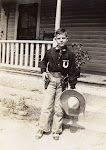
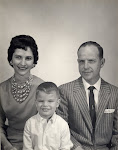

Here's what inevitably happens. I share a movie with a friend or a loved one. Something I think they'll really like but probably have not seen. They love it, and I tell them "That was one of my Dad's favorite movies."

So here are some of those movies, my memories and thoughts, and what made them my Dad's favorites.


Thursday, December 10, 2009

SCROOGE (1970)


In the 1960’s, my Dad jury rigged a construction of cables and alligator clips and plugs that allowed us to record audio from our television and from our console radio/record player onto our portable (by 1960’s standards) reel-to-reel tape recorder. In the early 1970’s, I spent several days just before Christmas in the hospital. I took the reel-to-reel with me, and to keep in the holiday mood, listened to the soundtrack of the movie ‘"Scrooge.”

There have been more film adaptations of Charles Dickens’s “A Christmas Carol” than can be counted, beginning with short silent versions near the turn of the last century and continuing to today. But it was the musical version, “Scrooge,” starring Albert Finney in the title role, that was my Dad’s favorite, and is mine.


In 1970, turning the Dickens classic into a musical would not have been an obvious move without the monstrous success of another Dickens musical adaptation, “Oliver!,” just two years earlier.

Thirty-four year old Albert Finney may be the youngest actor to ever portray Ebenezer Scrooge in a feature film. Richard Harris, who was initially offered the role, and having some musical experience in “Camelot” three years before, would have been 40. Rex Harrison, briefly cast before conflicts with another commitment took him out of the running, would have been 62.

Here, Finney is straddling his intermittent and somewhat schizophrenic shift from leading man to character actor. Finney, the young studly hooligan of “Saturday Night and Sunday Morning” and “Tom Jones,” is utterly convincing and almost unrecognizable as the gnarled, grimacing elder Scrooge. And in a part often portrayed by a younger alternate actor, he is virile and attractive as the younger version of Scrooge seen in flashbacks instigated by the Ghost of Christmas Past. Finney’s ability to persuasively portray both ages lends the story a continuity of emotion and makes the transition from youthful optimistic lover to bitter cantankerous misanthrope all the more heartbreaking and believable.

Through the 1970’s and 80’s, Finney would continue to essay similar, make-up laden character roles in “Murder on the Orient Express” and “The Dresser,” while continuing to play leading love interests and even action heroes in films such as “Gumshoe,” “The Wolfen,” and “Looker.” But “Scrooge” was his only chance to play both in one film.


There is a lot of impressive talent in evidence here. The supporting cast is a once-in-a-lifetime collection of British luminaries, including Dame Edith Evans, Kenneth More, Laurence Naismith, and Alec Guinness as Marley’s Ghost.

Finney and the cast are put through his paces by veteran British director Ronald Neame, whose career of over 80 screen credits stretched back at least as far as Alfred Hitchcock’s and the British film industry’s first talking picture, “Blackmail.” Neame’s eclectic career as a director included “The Horse's Mouth,” “Tunes of Glory, “The Prime of Miss Jean Brodie” and “The Poseidon Adventure.”

He collaborates here with the man he considered to be “the greatest cameraman in the world,” renowned Director of Photography Oswald Morris, who had photographed “Oliver!,” and who worked with Neame in one capacity or another on 15 ventures.

The impressive visual effects, including flying sequences, are by British special effects legend Wally Veevers (“Things to Come,” “Night of the Demon,” “Dr. Strangelove or: How I Learned to Stop Worrying and Love the Bomb ,” “2001: A Space Odyssey” “Excalibur”), eight years before he helped the world believe that a man could fly in “Superman.”

Even the whimsical credit sequence by iconoclastic cartoonist and illustrator Ronald Searle is notable (see images here ). Searle was solicited no doubt in part due to his illustrated version of "A Christmas Carol" published in 1961 (see images here).


But the real creative force behind “Scrooge” is undoubtedly Leslie Bricusse, who adapted the Charles Dickens story, composed the score and wrote the lyrics.

The script is tight, funny and moving, using Scrooge’s back story to lend pathos and verisimilitude to a character too often charactured. The actors deliver uniformly first class performances. The visuals, design, and costumes are striking, taking full advantage of the period setting. But it is the joyous, emotive, catchy songs and the lively choreography that accompanies them that truly distinguishes this version and that stayed with my Dad, in particular the raucous “Thank You Very Much,” a jubilant celebration of Scrooge’s passing by those who owe him money …


… and the festive “December the 25th,” which deserved to become a Christmas standard.


Even cleverer is the way several of the songs are reprised during and after Scrooge’s conversion. Scrooge’s anthem “I Hate People” becomes “I Like Life.” “Father Christmas,” sung with sarcastic bite by the street urchins that pester Scrooge as he slogs through the dirty streets of London, becomes an upbeat appreciation of Scrooge as he dons a Father Christmas costume to deliver gifts on Christmas morning. And “Thank You Very Much” is repeated in sincere gratitude for the man Scrooge has become.

Ronald Neame related this story to the British Film Institute: We were going to have Richard Harris. He was going to play the lead. And he had to go and make a film in Israel, I think. Something went wrong with it and he had to take it over, and he had to direct it. So we couldn't get him. The company who were financing the film said, well, if you can't get him, there are only two or three other names that are acceptable to us. One of those names was Finney - who turned it down. He said, I don't want to make a film just now. So we thought, Rex, Rex Harrison. Rex could sort of play Scrooge. So we gave the script to Rex and he liked it very much and we cast him. But there was a problem. Because he was at the end of a play which he was working on in London. He had three weeks more to play. We had to start in two weeks, because of weather conditions, summer and winter scenes. So this three weeks was really a nuisance, but we had to face it. And then we decided we would pay the theatre off. We'd pay for the three weeks, and we'd get Rex earlier. And then one day, we had a phone call from Alby Finney, who said, on the phone, I have just read your screenplay, in my office, because my partner is playing a small part, and (he said) you know, I would love to play it. And we said, Oh, Alby, oh goodness me! We've cast Rex Harrison. And he said, Oh well, it's my fault, but I would have loved it. And we did a terrible thing. Slightly ashamed to tell you. We told Rex that we hadn't got the money to pay off the theatre, but we had to start shooting the following Monday. Rex didn't mind very much. And Alby played the part. I've always been slightly ashamed of that. I don't know why I should tell you tonight, but you're all very fair!

You can see more clips from “Scrooge” at the Turner Classic Movies web site.
And you can buy Scrooge at Amazon.com.

Thursday, December 3, 2009

A THOUSAND CLOWNS (1965)


My Dad led what could be described as a conventional life, even thought I think he was far from a conventional man. He worked his way through college, found employment in the shipping and then the textile industries. He started his own business. He went to work and came home every day at the same times. He never worked weekends. He kept his work life and his home life separate. And like most men of his generation, he prioritized supporting a family over other more personal goals. It was not until late in his life that I learned he had secretly harbored a desire to be an architect. He was a talented amateur artist, leaning toward emulating his childhood heroes like comic book illustrators Jack Kirby and Bill Everett. He designed the addition to our house. But his real life was his home and his family, and he was happy to do what was necessary to support and protect them.

However, it is no surprise that my Dad and others might have found the life of Murray N. Burns diverting or even appealing. As portrayed by Jason Robards on the Broadway stage and then in the movie version of playwright Herb Gardner’s “A Thousand Clowns,” Murray is a charming, charismatic, witty, iconoclastic, irreverent, bohemian non-conformist, redeemed by his affection for the 12 year-old nephew Nick that he has raised since his mother abandoned him. Together they live an unconventional life in a one-room New York City apartment as cluttered, eclectic and in disarray as Murray himself. As the movie opens Burns has been unemployed for months, having quit his demeaning job as joke writer for a television show aptly titled "Chuckles the Chipmunk.” He has never officially adopted his nephew, and the two draw the attention of social workers who threaten to take the boy into foster care unless Murray can somehow prove his fitness as a guardian.


“A Thousand Clowns” might be described as a coming-of-age story about a thirty-something man. But in the end, “A Thousand Clowns” is about parenting. And once Murray is convinced that he has provided Nick with the foundation to think for himself and not become “a chair,” he happily enters the rat race he has so abhorred for the sake of the “son” he loves. Murray is among the ranks of other non-conformist but ultimately dedicated movie parents and parental figures from others of my Dad’s favorite movies, most aptly Frank Sinatra in “A Hole in the Head” and Cary Grant in “Father Goose.”

I only briefly knew my father’s father, but I have the impression he may as well have been a bit of an endearing small-town rouge. And I like to think that my own relationship with my father somewhat mirrors a small portion of the fun and friendship these movies relate, even though my father’s life evidences none of the irresponsibility these characters possess.

“A Thousand Clowns” is ably directed by live television veteran Fred Coe, a producer and director known for discovering and nurturing extraordinary writing talent (Paddy Chayefsky, Horton Foote, Tad Mosel, JP Miller, Herb Gardner). He attempted to “open up” the one-set play with punctuating and exuberant location excursions, shot with New Wave inspired visuals and sounds. But derived as it is from a Tony-nominated stage play, the movie maintains a talky and hightened theatricality, particularly in performance, that is appropriate to the material. While some might consider this to be Robard’s movie, it is really the perfect balance of well-developed, three-dimensional characters and endearing performances that elevates “A Thousand Clowns.”


Barry Gordon delivers a career making performance as the precocious Nick. It is shocking that as he continues to work to this day he has never been given the chance at another role as meaty and substantial as the one in “A Thousand Clowns.” Martin Balsam won his only Oscar as Murray’s conventional and concerned brother Arnold. Barbara Harris’ film debut brings her signature quirkiness to the role of the neophyte social worker pulled in by the appeal of Murray’s world. And famed Broadway director Gene Saks gives one of his rare film performances, bringing memorable menace and smarminess to "Chuckles the Chipmunk.”

But perhaps the most moving, eloquent and understated performance comes from William Daniels in only his second film appearance, two years before he would appear as Dustin Hoffman’s father in “The Graduate.” As Albert Amundsen, the stiff, stuffy, cold, humorless, by-the-book social worker who eventually threatens to take Nick from his home with Murray, Daniels plays what is essentially the heavy of the film. But author Gardner and performer Daniels bring a pathos and humanity to the character that borders on heart-breaking. He also has one of the best lines in the movie: "You are not a person, Mr. Burns. You are an experience."


Daniels went on to memorable performances in movies, television, and on the stage. He originated the part of John Adams in the Broadway musical “1776” and repeated the role in the film version. He played John Quincy Adams in the PBS production of “The Adams Chronicles,” won two Emmy’s as the caustic but well-meaning Dr. Mark Craig on the hit TV series “St. Elsewhere," was beloved of a generationas teacher Mr. Feeny in ABC's "Boy Meets World" and its Disney Channel sequel "Girl Meets World," and, to my Dad’s delight, was the voice of KITT the car in the original “Knight Rider” series.

You can watch "A Thousand Clowns" with some regularity on TCM.

Friday, November 20, 2009

LADY IN THE LAKE (1947)


Webster’s defines “gimmick” as “an ingenious or novel device, scheme, or stratagem, esp. one designed to attract attention or increase appeal,” and more negatively as “a concealed, usually devious aspect or feature of something, as a plan or deal: An offer that good must have a gimmick in it somewhere.” It is perhaps this later usage that has given the word a derogatory flavor. But a good gimmick, especially in a movie, can be the spark that gives a film life.

Some gimmicks become mainstream. At one point, sound was a gimmick (“The Jazz Singer”), color was a gimmick (“The Phantom of the Opera,” “Becky Sharp”), hand-held cameras were a gimmick and rapid paced editing was a gimmick. Then there are gimmicks that are rarer, or have more limited life spans. 3-D was such a gimmick, with a short life cycle in the 1950’s before it was resurrected in the 21st century. Telling a story in reverse is an interesting seldom used gimmick (“Betrayal,” “Memento”). Giving a film the appearance of being filmed in a continuous take (“Rope”), or shooting an entire film in a continuous take ("Russian Ark") are others. Then there were the films of producer William Castle, who was famous for inserting gimmicks into his films, their promotion and their exhibition, electrifying theater seats (“The Tingler”), flying glow-in-the-dark skeletons over the audience (“House on Haunted Hill”) and providing special glasses that allowed the viewer to see on-screen ghosts (“13 Ghosts”).

In 1940, when Orson Welles was first lured to Hollywood by an extraordinary contract with RKO studios, giving him unprecedented artistic control of his films, he toyed with the notion of an intriguing gimmick. Welles had for years produced radio dramas that were largely told in the first person. He thought this might translate to film as well. What if an entire film was seen from the main character’s perspective, through that character’s eyes? What if the entire film was a series of point-of-view shots. This is the approach he adopted as he moved forward planning an ambitious adaptation of Joseph Conrad’s “Heart of Darkness,” wherein “eye = I.” Budgetary restrictions lead to the project being abandoned, making the way for the production of “Citizen Kane.”


Eventually a filmmaker and studio took on this daunting narrative and technical challenge. The studio, which I imagine did not quite know what it was getting itself into, was MGM, and the filmmaker was actor Robert Montgomery. The film was an adaptation of Raymond Chandler’s “Lady in the Lake.” Montgomery was making his credited directorial debut while playing the lead role of Philip Marlow, Private Detective, literally from behind the camera. Never before had almost an entire film been photographed with a subjective camera, no mean feat in 1947 when cameras were large, bulky, unwieldy devices, and before the invention of steady-cams of even the widespread use of hand-held cameras. It is even to this day an almost unique narrative device. Portions of other movies, even lengthy sequences, had been shot from a character’s unbroken perspective before, most notably in Rouben Mamoulian's "Dr. Jekyll and Mr. Hyde." And some television episodes experimented with the technique in the years to follow. But I do not believe there has ever been another mainstream film to adopt the technique so thoroughly and consistently. The MGM publicity department played this to the hilt in their trailer for the movie.


So this was a film that, even though the script and performances are wildly uneven, and even though it was disowned as an adaptation by Chandler, stayed with its viewers as something unique and original, something they had never seen before, a trait always attractive to my Dad, and why “Lady in the Lake” was one of my Dad’s favorite movies.

See “Lady in the Lake” on Turner Classic Movies this Tuesday, November 24, 2009 at 6:30 am EST (5:30 am CST) and on January 20, 2010 at 8 am EST (7 am CST).

Buy Lady in the Lake at Amazon.com

Friday, November 13, 2009

WHITE HEAT (1949)


The classic era of Warner Brothers gangster movies is bookended by four extraordinary, brutal and unsentimental performances from two of Hollywood’s most talented stars, Edward G. Robinson and James Cagney. Robinson’s performance as the crude and ambitious Rico Bandello in “Little Caesar” in 1930 was followed the next year by Cagney’s as the greedy and ruthless Tom Powers in “The Public Enemy.” The studio hit a trifecta the following year when Paul Muni played a thinly veiled version of Al Capone in “Scarface.”

Then came enforcement of the Motion Picture Production Code (AKA the Hays Code), citing what was, and more importantly, what was not acceptable content for motion pictures. The Motion Pictures Producers and Distributors Association (MPPDA) had adopted the guidelines, developed through the late 1920’s, in 1930, but an enforcement entity was not in place until 1934. With its prohibitions against creating sympathy for “the side of crime, wrongdoing, evil or sin,” the depiction of the use of liquor "when not required by the plot or for proper characterization," explicit presentations of the methods of crime, murder scenes unless “filmed in a way that would discourage imitations in real life,” brutal killings and revenge, the Code effectively ended the hard-edged portrayal of gangsters as protagonists. These tough guy characters instead morphed into likable rouges (“All Through the Night,” “Casablanca”), private detectives (“The Maltese Falcon,” “The Big Sleep.”), officers of the law (“G-Men,” “Bullets or Ballots”) and redeemed criminals (“High Sierra.”). It is safe to say that Warner Brothers with its penchant for gritty urban dramas and psychological complexity pushed at the edge of the Code more than any other studio, and there are some exceptions where the coarseness and brutality of the earlier films sneak through (“The Roaring Twenties”), as well as films in which the gangsters are pitted in doomed confrontations with their betters and served their just rewards (“Angels With Dirty Faces,” “Dead End”).

Both Robinson and Cagney continued to mine their tough guy personas. Robinson became an accomplished character actor in films as diverse as “Dr. Ehrlich's Magic Bullet,” “The Sea Wolf,” “Double Indemnity,” and “Our Vines Have Tender Grapes.” Cagney became one of the most successful and beloved stars in Hollywood with films such as “The Fighting 69th,” “The Strawberry Blonde,” and “Yankee Doodle Dandy.”

In 1948 and 1949, as the power of the production code was waning, both Robinson and Cagney returned to the genre and the type of characters that had made them famous – Robinson as Johnny Rocco in “Key Largo,” and Cagney as Cody Jarrett in “White Heat.” Both can be seen as aged extensions of their previous performances in “Little Caesar” and “The Public Enemy.” And whereas “Key Largo” is a great entertainment from director John Huston in the vein of the post-code Warner Brothers films of the later 1930’s and 1940’s, “White Heat” is an unexpected and surprising revelation.


Directed with little of the polish, gloss or civility of most studio pictures of the time by Raoul Walsh, “White Heat” follows the exploits of a rampantly paranoid aging criminal and sociopath with a mother fixation and a sadistic streak, a character that Cagney plays with no sentimentality, but with an enormous amount of energy and magnetism. It is a character unlike almost any other that had headlined a motion picture since the advent of the Production Code, or perhaps even before. It is the strength of Cagney’s charisma, as well as the comparable blandness that Edmond O’Brien brings to his portrayal of Federal Agent and protagonist Hank Fallon, that adds interest and even sympathy to such a reprehensible but utterly fascinating character.

Why was “White Heat” one of my Dad’s favorite movies? I believe that while B Westerns were his genre of choice as a young boy, the Warner Brothers crime films of the late 30’s and 40’s, with their hard boiled characters and gritty environments, were the favorites of his adolescence. I think it is also the uniqueness of Cagney’s character and portrayal, as Dad was always attracted to movies with a new and different take on their stories and characters. But in the days before VCR’s and DVR’s, it was a memorable moment or even line that lodged a movie into memory. And “White Heat” has both. One of the most harrowing moments and unrestrained performances in film is when Jarrett, serving out a prison term for a crime he did not commit but instead used as an alibi for a worse crime he did commit, hears of his mother’s death, and goes literally berserk. It is a tour-de-force for Cagney.


But no one who sees “White Heat” will ever forget Jarrett’s final line, nor the circumstances surrounding it – “Top of the World, Ma.” My Dad certainly did not.


Watch “White Heat” on Turner Classic Movies, Saturday November 14 at 10 am Eastern (9 am Central) and Monday, November 30 at 1:30 pm Eastern (12:30 pm Central)


Buy White Heat at Amazon.com

© 2009 Edward Bowen

Friday, November 6, 2009

TAKE THE MONEY AND RUN (1969)


Woody Allen’s debut as a triple threat (co-writer, director, and actor) is a machine gun strafe of gags. Roger Ebert criticized the film, saying “I suspect it's a list of a lot of things Woody Allen wanted to do in a movie someday, and the sad thing is he did them all at once.” Having more in common with later Mel Brooks or Abrahams/Zucker movies than with the more meditative Allen comedies that would follow, “Take the Money and Run” is, as they are described in the director’s own “Stardust Memories,” one of Allen’s “early funny ones,” along with "Bananas" and "Sleeper." There is none of the character development or pathos of later efforts such as “Annie Hall,” “Manhattan,” or “Hannah and Her Sisters.”

The film’s format as a “mockumentary,” the first of its kind, years before “Meet the Rutles (1978),” “This is Spinal Tap (1984),” or “Waiting for Guffman (1997),” allows it to be a purposefully disconnected series of gags built around the character of consistently unsuccessful career criminal Virgil Stockwell, played by Allen. I think the originality of this premise, a faux documentary that mixes playing it straight with outrageous slapstick and shtick, is what my Dad enjoyed. But the film is just as much a pastiche of "The Untouchables" and other earnestly narrated true crime television series that my Dad enjoyed.

Although “Take the Money and Run” was the first in a long series of films Allen wrote, directed, and starred in, it was certainly not the beginning of his career. He had previously been a successful gag writer and stand-up comic, had co-written and “directed” “What’s Up Tiger Lily,” a Japanese spy movie that Allen and company re-dubbed into a comedy, and had acted in such films as “What’s New Pussycat,” for which he wrote the original and largely discarded screenplay, and the original “Casino Royale.” It is reputedly his experience in the later chaotically produced film that initiated his desire to direct "Take the Money and Run” himself, after a supposedly unsuccessful attempt to get Jerry Lewis to take the job on.

Allen began an important relationship on this film with editor Ralph Rosenblum, credited as “Editorial Consultant,” who would go on to edit five more Allen features, including “Annie Hall.” He is often credited with saving “Take the Money and Run” by tightening the edit and convincing Allen to remove a violent ending emulating the bloody climax of “Bonnie and Clyde.” Rosenblum is also often credited with much of the intricate structure that makes "Annie Hall" so complelling.

But a key element to the success of “Take the Money and Run” is the performance and voice of narrator Jackson Beck, most famously the voice behind the opening of the original “Adventures of Superman” television series, voice of Blutto in the "Popeye" cartoon series, and pitchman for Little Caesar’s Pizza. The seriousness with which he plays his role adds a foundation of gravitas that buoys the outrageous comedy on screen. Beck began his prolific and lengthy career as a silent film actor, and was still doing voice work into the 1990's.


As a father, there is much in Woody Allen’s life to abhor, but this is still a funny movie, and one my Dad enjoyed long before Allen’s tragic and reprehensible behavior in later life.

Catch “Take the Money and Run” on Turner Classic Movies on November 7, 2009 at 8 pm Eastern and on December 1, 2009 at 6 pm Eastern. Here's the preview trailer.


Buy Take the Money and Run - Uncut (Widescreen Edition) at Amazon.com

© 2009 Edward Bowen

Tuesday, September 15, 2009

A TEMPEST IN A WATER CLOSET


Jack Paar and the Water Closet Joke:

A bit of a departure for this entry - let's call it "My Dad's Favorite Joke."

On February 10, 1960, television icon and "Tonight Show" host Jack Paar told the following joke as part of the late night talk show:

"An English lady, while visiting Switzerland, was looking for a room, and she asked the schoolmaster if he could recommend any to her. He took her to see several rooms, and when everything was settled, the lady returned to her home to make the final preparations to move. When she arrived home, the thought suddenly occurred to her that she had not seen a "W.C." (water closet - what the British often call a toilet) around the place. So she immediately wrote a note to the schoolmaster asking him if there were a W.C. around. The schoolmaster was a very poor student of English, so he asked the parish priest if he could help in the matter. Together they tired to discover the meaning of the letters W.C., and the only solution they could find for the letters was a Wayside Chapel. The schoolmaster then wrote to the English lady the following note:

Dear Madam,

I take great pleasure in informing you that the W.C. is situated nine miles from the house you occupy, in the center of a beautiful grove of pine trees surrounded by lovely grounds. It is capable of holding 229 people and it is open on Sunday and Thursday only. As there are a great number of people and they are expected during the summer months, I would suggest that you come early: although there is plenty of standing room as a rule. You will no doubt be glad to hear that a good number of people bring their lunch and make a day of it. While others who can afford to go by car arrive just in time. I would especially recommend that your ladyship go on Thursday when there is a musical accompaniment. It may interest you to know that my daughter was married in the W.C. and it was there that she met her husband. I can remember the rush there was for seats. There were ten people to a seat ordinarily occupied by one. It was wonderful to see the expression on their faces. The newest attraction is a bell donated by a wealthy resident of the district. It rings every time a person enters. A bazaar is to be held to provide plush seats for all the people, since they feel it is a long felt need. My wife is rather delicate, so she can't attend regularly. I shall be delighted to reserve the best seat for you if you wish, where you will be seen by all. For the children, there is a special time and place so that they will not disturb the elders. Hoping to have been of service to you, I remain,

Sincerely,

The Schoolmaster."

The joke was also published in Paar's book "I Kid You Not," and it was a perennial favorite around our house. It was often a challenge to see who could read it aloud without laughing. I can clearly remember my Dad painstakingly working his way through a reading while trying to force his mouth from curling upwards in the smile that would undoubtledy open the door to full fledged laughter.

Paar described the joke as "a little anecdote given me by a friend. He got it from his thirteen-year-old niece, whose teacher had read it to her junior high school class. They had enjoyed it so much that the teacher had given each class member a copy."

So Paar was ill prepared when he discovered that the network censor, without notifying him, had cut the joke from the broadcast, leaving the impression that Paar had told a "smutty story." Paar asked that the offending material be aired the next night, and that the audience be allowed to decide whether it was offensive or not. The netword refused. The next night, a still angry Paar gave one of the most public, emotional and memorable resignation speeches of all time.


By March 7, Paar was back on the air hosting the Tonight Show. He strolled onto the stage, struck a pose before the expectant audience and uttered the infamous line "As I was saying before I was interrupted ..." The audience erupted in laughter.

He continued "I believe the last thing I said was 'There must be a better way to make a living than this.' Well, I've looked...and there isn't." He explained with his usual self-depricating honesty "Leaving the show was a childish and perhaps emotional thing. I have been guilty of such action in the past and will perhaps be again. I'm totally unable to hide what I feel. It is not an asset in show business, but I shall do the best I can to amuse and entertain you and let other people speak freely, as I have in the past."

Two years later, in March of 1962, Paar left "The Tonight Show, " stating that he could no longer maintain the five-nights-a-week grind, and opening the door for replacement Johnny Carson. He moved to prime time with "The Jack Paar Program" airing weekly on Friday nights through 1965.


© 2009 Edward Bowen

Saturday, August 22, 2009

THE OKLAHOMA KID (1939)


And while we’re discussing the westerns of 1939, another favorite of my Dad’s was Warner Brothers’ “The Oklahoma Kid.” So what did my Dad like so much about “The Oklahoma Kid?” Well, it’s a western with James Cagney as the hero and Humphrey Bogart as the villain. What’s not to like about that. It’s Cagney’s first western, after carving out a niche for himself as a contemporary urban tough guy in films such as “The Public Enemy” and “Angels With Dirty Faces.” But Cagney was a versatile and gifted performer. Prior to “The Oklahoma Kid” he had performed in comedies, played hoofers in musicals, and had even essayed the role of Bottom in Warner Brothers’ and Max Reinhart’s production of Shakespeare’s “A Midsummer Night’s Dream.” Nevertheless, critics and audiences seemed to have particular difficulty accepting Cagney in a cowboy role. His co-star Bogart described him in his ten-gallon hat as looking like a mushroom. However, Cagney brings whimsy and eccentricity to what might have been a standard western role, famously coining the pick-up line “feel the air” and singing “I Don’t Want to Play in Your Yard” while fending off the interruptions of bad guy Ward Bond.


In 1939, Bogart was at the stage in his career where he accepted whatever parts Warner Brothers threw at him, and the studio often seemed at a loss to know how best to use him. Most often cast as heavies and gangsters, the western venue was also a departure for him. It would be another two years and ten films before Bogart would achieve true star status with “High Sierra” and “The Maltese Falcon.” Whereas Cagney’s Jim Kincaid is, for the most part, amiable and disarming, Bogart’s Whip McCord, dressed from head to toe in black, is brutal, humorless, course, unattractive, and utterly devoid of any redeeming characteristics.

But I think what might have really attracted my Dad to “The Oklahoma Kid” is that it is a merging of the two favorite genres of his youth, the “B” western that was the love of his childhood, and the tough guy gangster/detective movie, best exemplified by the output of the Warner Brothers studio, that was the mainstay of his adolescence.

My Dad seemed more in tune with Warner Brothers’ films than those of any other studio. During the golden age of the Hollywood studio system, the studios, each run by formidable personalities, all had distinct styles of their own. Having pioneered the use of synchronized sound for motion pictures, Warners was known for biting humor, hard edged, moody, socially-conscious fare and urban, lower-class, tough characters, all of which Dad enjoyed.

The western elements of “The Oklahoma Kid” are obvious. The film even pays homage to the popular singing cowboys of the “B” westerns when Cagney performs not only “I Don’t Want to Play in Your Yard,” but also a Spanish version of ‘Rockaby Baby.” (As a side note, “I Don’t Want to Play in Your Yard” also figures prominently in Warren Beatty’s 1981 film “Reds.”)

The influences of the Warners’ gritty and urban gangster films are more subtle. Although Cagney’s character is quirky and appealing, this is largely a dark drama, with none of the lightness of tone found in “Destry Rides Again” that same year.

Cagney’s charming but sometimes brutal anti-hero, a criminal himself, owes a great deal to his gangster roles. The town of Tulsa is a crowded, tight, noisy place, feeling more like Warners’ New York back lot than the open expanses and simple designs of most previous western settings. Much of the movie takes place at night; even the chase scenes through the rocky wilderness are photographed day for night by renowned cinematographer James Wong Howe. His black and white lighting is often dark with shadows, his compositions are crowded with foreground elements, his camera is often low to the ground, and he keeps the horizon line high in the frame, all visual elements common to more urban fare, and adding to the claustrophobia. Other than in the Oklahoma land rush scenes, there are none of the expansive vistas common to the films of other western directors like John Ford, none of the color and brightness of Warners’ other western from that year, “Dodge City.” There is even a hint of the social consciousness that was evident in Warners’ early, pre production-code films. The film opens with President Grover Cleveland dismayed over his hesitant signing of the Indian Appropriations Bill and his belief that the opening of the Oklahoma territories to settlers is unfair to native Americans. But it is the cynicism and worldliness expressed by Cagney’s character in this exchange that truly mirrors the attitude of many early Warners pictures.  Says the Kid: "The strong take it away from the weak, and the smart take it away from the strong."


And, if you listen closely, you will hear in Max Steiner’s score some of the same motifs that reoccur two years later in “The Maltese Falcon.”
Although Cagney’s character brings some lightness and humor to the proceedings, this is largely a dark and surprisingly violent drama, with none of the lightness of tone found in “Destry Rides Again” that same year. Certain elements of this revenge tale are seen again years later in “Hour of the Gun.”

“The Oklahoma Kid” is probably as close to being an urban gangster film as a western can be.

Amazingly, this is another classic film that has never been released on DVD. Luckily, it airs on Turner Classic Movies with some regularity.


© 2009 Edward Bowen
© 2009 Edward Bowen

Pages